















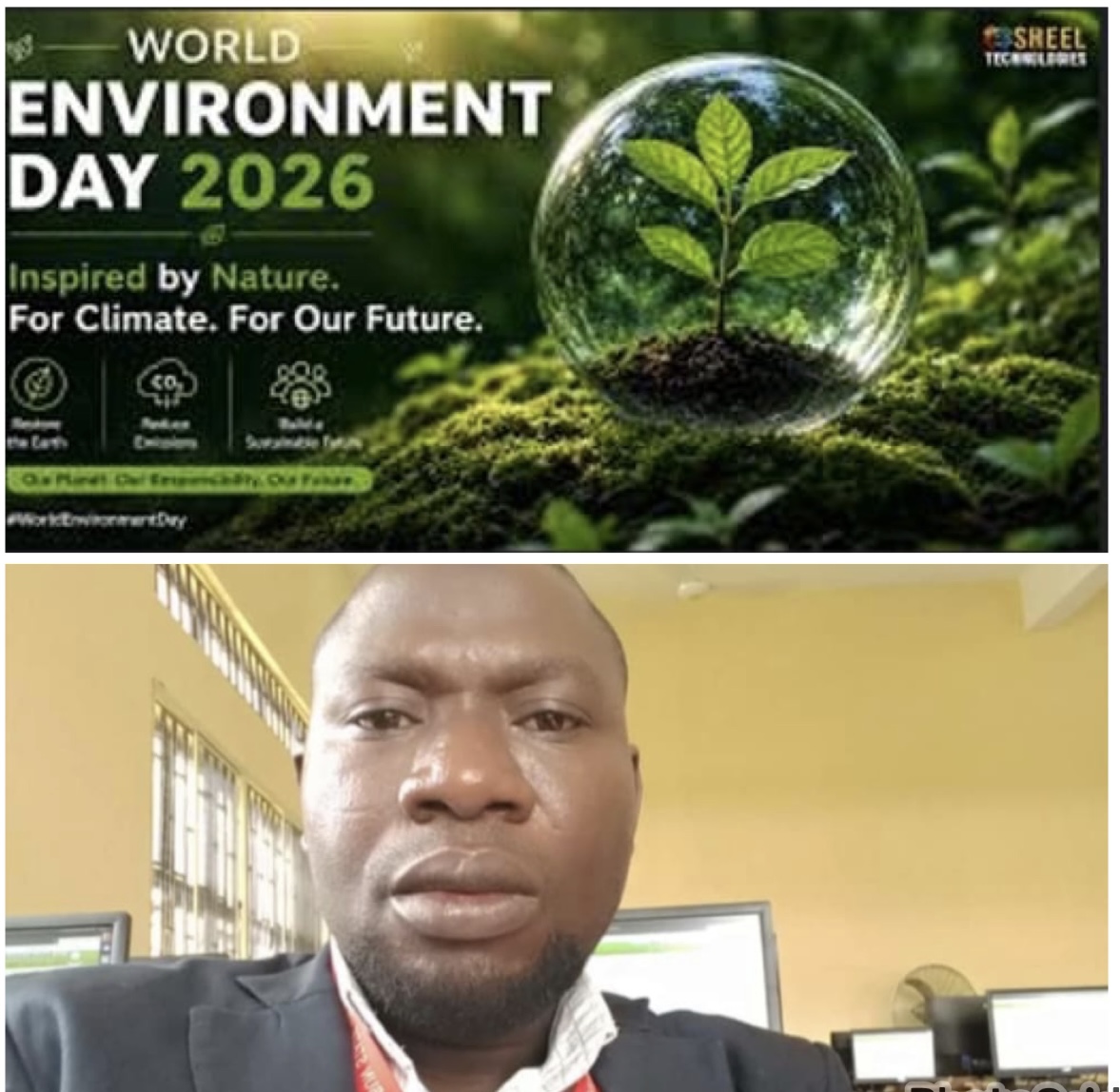
WORLD ENVIRONMENT DAY 2026: Inspired by Nature, For Our Climate, For Our Future
Why We Must Stop Actions That Jeopardise Our Collective Existence || By Dr. Rafiu Babatunde Ibrahim
Today, Friday, June 5, 2026, the global community marks World Environment Day-a day set aside by the United Nations to provoke global awareness and action for the protection of our environment. Since its establishment in 1972, this annual commemoration has grown into the largest global platform for environmental public outreach, engaging millions of people across every continent.
This year, the official international theme is profoundly resonant: “Inspired by Nature. For Climate. For Our Future.”The global host nation is Azerbaijan, a country that has experienced firsthand the devastating impacts of climate change-from drying inland seas to intensifying heatwaves. The choice of Azerbaijan signals a critical message: climate change is not a distant threat. It is here. It is now. And it is accelerating.
But as we speak, as we read, as we go about our daily lives-actions that jeopardise our collective existence continue unabated. This article is an urgent call to every Nigerian, every African, every global citizen: We must desist from any action that harms our environment. Our lives depend on it.
The Climate Crisis: A Matter of Life and Death
The theme for World Environment Day 2026 could not have come at a more critical moment. The Intergovernmental Panel on Climate Change (IPCC) has repeatedly warned that the window to secure a liveable future is rapidly closing. Global temperatures have already risen by approximately 1.2°C above pre-industrial levels. At the current trajectory, we are hurtling toward 2.7°C of warming by the end of this century-a level that scientists describe as “catastrophic.”
What does this mean for Nigeria? It means more frequent and more devastating floods-like the 2022 floods that submerged over 30 states, displaced over 1.4 million people, and claimed over 600 lives. It means prolonged droughts in the north, where farmers can no longer predict planting seasons. It means rising sea levels threatening coastal cities like Lagos, where over 20 million people live. It means heatwaves becoming more intense, more frequent, and more deadly. It means conflicts over shrinking resources-water, grazing land, arable soil.
The climate crisis is not an abstraction. It is the enemy of our collective existence.
Our Daily Actions: The Unseen Enemy
The tragedy is that many of the actions that worsen climate change and environmental degradation are actions we take daily-often without thinking, often without malice, but always with consequences.
1. Indiscriminate waste dumping: When we throw plastic bottles, nylon bags, and other non-biodegradable waste into drains and waterways, we block drainage systems, create breeding grounds for disease vectors, and eventually choke our rivers and oceans. Plastic waste that enters the ocean breaks down into microplastics that enter the food chain-meaning we are literally eating our own garbage.
2. Deforestation and tree felling: Nigeria has one of the highest rates of deforestation in the world. We have lost over 90 percent of our original forest cover. Every tree cut without replacement reduces the earth’s capacity to absorb carbon dioxide, worsens local flooding, increases soil erosion, and destroys habitats for countless species. When we burn charcoal for cooking or fell timber for sale, we are not just cutting trees — we are cutting our own future.
3. Bush burning: The annual practice of setting fire to vegetation-whether for hunting, clearing land, or sheer habit-releases massive amounts of carbon dioxide and other greenhouse gases. It destroys soil fertility, kills beneficial organisms, and often spirals out of control, destroying homes and farms. Bush burning is not a harmless tradition; it is an act of environmental arson.
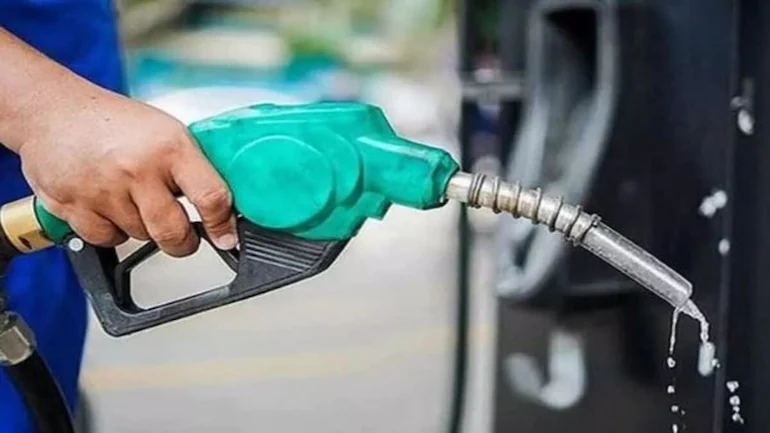
4. Generator fumes and air pollution: With Nigeria’s unreliable electricity supply, millions of households and businesses rely on petrol and diesel generators. The fumes from these generators-often placed near windows, doors, or inside buildings-contain carbon monoxide, nitrogen dioxide, and particulate matter. These pollutants cause respiratory diseases, heart conditions, and cancer. They also contribute significantly to greenhouse gas emissions. Every litre of fuel burned in a generator is a contribution to the climate crisis.
5. Water wastage: Clean water is becoming increasingly scarce. Yet we leave taps running, wash cars with hoses, and use potable water for tasks that could be done with harvested rainwater. Water scarcity is exacerbated by climate change. Wasting water is wasting life.
6. Over-reliance on single-use plastics: Styrofoam food packs, plastic water sachets, and nylon bags are used for minutes but persist in the environment for centuries. They clog drainage, pollute soil, and kill aquatic life when they reach our rivers and oceans.
“Inspired by Nature”: What Nature Teaches Us
The World Environment Day theme, “Inspired by Nature,” reminds us that nature is not merely a resource to be exploited. Nature is a teacher. Nature is a solution. Consider how forests naturally regulate water cycles, preventing both floods and droughts. Consider how mangroves along our coastlines absorb storm surges and provide nursery grounds for fish. Consider how wetlands filter pollutants from water before they reach rivers and oceans. Consider how trees provide shade, cool our cities, and absorb the carbon dioxide we emit.
Nature has spent billions of years perfecting systems of circularity, efficiency, and resilience. Nothing in nature is wasted. One organism’s waste becomes another organism’s food. Energy flows in cycles, not linear paths. Diversity creates stability. We are being called, on this World Environment Day, to learn from nature. To mimic its principles. To stop fighting against natural systems and start working in harmony with them.
For Climate, For Our Future
The second part of the theme-“For Climate. For Our Future”– is a direct appeal to responsibility. Climate action is not a favour we do for polar bears or future generations (though both deserve our consideration). Climate action is an act of self-preservation. When we plant a tree, we are not beautifying a neighbourhood. We are creating a carbon sink, a flood buffer, a shade provider, and a habitat for biodiversity. When we refuse single-use plastic, we are not being fashionable. We are reducing the demand for fossil fuels (plastics are petrochemicals) and preventing pollution. When we sort our waste for recycling, we are not being tedious. We are conserving resources and reducing methane emissions from landfills. When we conserve water, we are not being frugal. We are ensuring that water remains available for drinking, sanitation, and agriculture. Every action matters. Every individual matters. Every choice-to dump or to dispose properly, to burn or to compost, to waste or to conserve- accumulates into collective outcomes.
A Call to Action for Every Nigerian
On this World Environment Day 2026, I issue a call to action to every Nigerian, from the bustling streets of Lagos to the farmlands of Borno, from the markets of Onitsha to the hills of Jos.
1. To individuals: Stop dumping waste in drainage channels. Stop burning bushes. Stop cutting trees without planting replacements. Reduce your use of single-use plastics. Turn off lights and appliances when not in use. Walk or cycle short distances instead of driving. Plant at least one tree this year. Educate your children and neighbours about environmental responsibility.
2. To communities: Organise regular clean-up exercises. Establish community tree-planting programmes. Advocate for proper waste collection services. Protect local wetlands, forests, and water bodies from encroachment. Hold local leaders accountable for environmental enforcement.
3. To businesses: Adopt sustainable practices in your operations. Reduce packaging. Recycle waste. Invest in energy efficiency. Report on your environmental impact transparently. Support community environmental initiatives.
4. To government at all levels: Enforce environmental laws without fear or favour. Provide public waste bins and collection services. Ban single-use plastics nationwide. Invest in public transportation to reduce emissions. Protect forests, wetlands, and waterways from illegal encroachment. Integrate climate education into school curricula. Lead by example in government operations.
5. To religious and traditional leaders: Use your platforms to preach environmental stewardship. Connect environmental responsibility to moral and spiritual duty. Mobilise your congregations and communities for action.
The Consequences of Inaction
Let us be clear about what is at stake. If we continue on our current path:
• By 2030, Lagos could experience annual flood damages exceeding $9 billion.
• By 2040, northern Nigeria could lose 50 percent of its arable land to desertification.
• By 2050, over 20 million Nigerians could become climate refugees.
• By 2100, large portions of the Niger Delta could be permanently submerged by sea-level rise.
These are not scare tactics. These are projections from the Nigerian Meteorological Agency, the World Bank, and the IPCC. They are based on current trends. They are avoidable-but only if we act now.
A Hopeful Future Is Possible
Despite the grim warnings, there is hope. Across Nigeria and around the world, individuals, communities, and governments are taking action.
In Lagos, the state government has banned styrofoam food containers. In Cross River, community-led forest conservation programmes have protected remaining rainforest. In Kano, young people are turning plastic waste into paving stones. In Kaduna, tree-planting campaigns have restored degraded land. In Enugu, solar-powered boreholes provide clean water without fossil fuels. These examples prove that change is possible. They prove that Nigerians are not passive victims of environmental degradation — we are active agents of solutions.
What You Can Do Today, Right Now
As World Environment Day 2026 unfolds today, here are concrete actions you can take immediately:
1. Do not dump waste in drains. If you see a blocked drain, report it to your local government or community leader.
2. Do not burn bushes or tyres. The smoke is toxic and the emissions accelerate climate change.
3. Plant a tree– even if it is just in a pot. Every tree matters.
4. Carry a reusable bag when you go shopping. Refuse nylon bags.
5. Minimise generator use. Turn off generators when not needed. Ensure proper ventilation.
6. Conserve water. Fix leaking taps. Collect rainwater for gardening.
7. Spread the word. Share this article. Talk to your neighbours. Educate your children.
A Final Word
World Environment Day 2026 reminds us that we are not separate from nature. We are part of nature. When we poison the environment, we poison ourselves. When we destroy ecosystems, we destroy our own life-support systems. When we ignore climate change, we gamble with our children’s future.
The theme-“Inspired by Nature. For Climate. For Our Future”– is not a slogan. It is a philosophy. It is a challenge. It is an invitation. Let nature inspire us to live differently. Let the climate crisis motivate us to act urgently. Let love for our future-for our children, for Nigeria, for humanity-compel us to change.
We have only one Earth. We have only one Nigeria. We have only one chance to get this right. May we choose wisely. May we act boldly. May we live responsibly.
Happy World Environment Day 2026.
Dr. R. B. Ibrahim (08104294271) is an Urban Infrastructure Development Planner, Climate Change Impact Analytics expert, writes from Ogbomoso, Nigeria. Join the conversation: #WorldEnvironmentDay2026 #InspiredByNature #ForClimateForOurFuture #NigeriaForClimate.