




Seyi Makinde: A Rare Political Figure Who Talks, Acts and Stands by His Word By || Aderemi Lawal
Nigeria needs a leader who understands that leadership is not about making the loudest promises during election campaigns. Leadership is about making commitments, taking responsibility and delivering results.
This is why the record of Engineer Oluseyi Abiodun Makinde, the Executive Governor of Oyo State, deserves serious national attention as Nigerians look toward the 2027 presidential election.
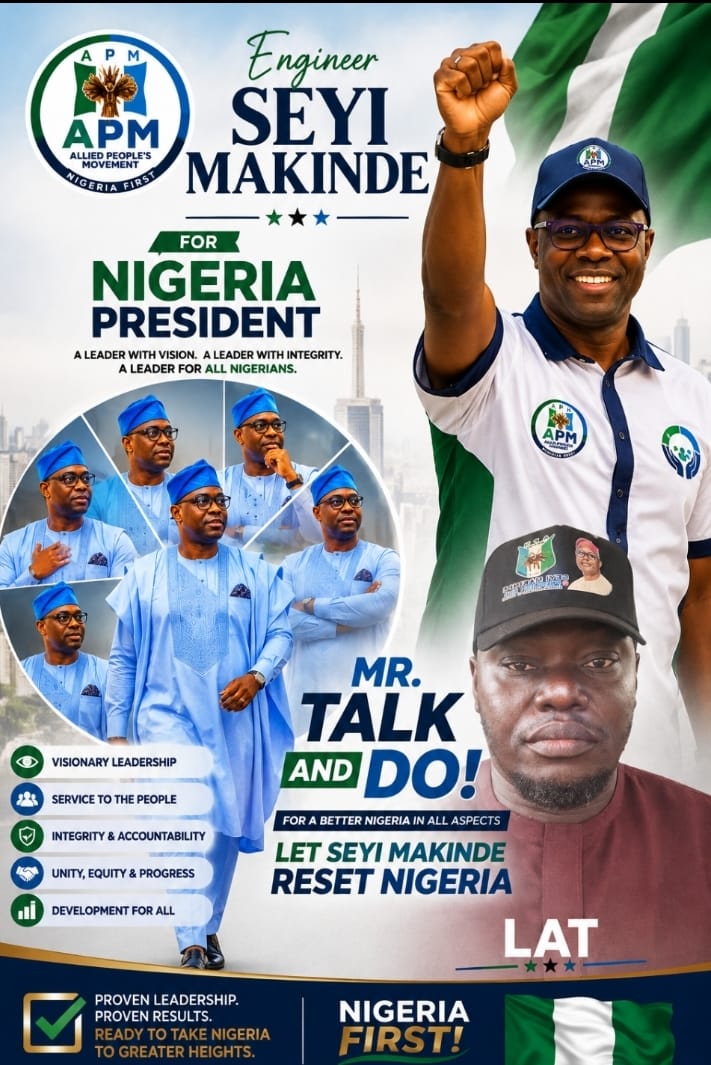
Makinde represents a style of politics that is increasingly rare in Nigeria — say what you mean, make a commitment, work to fulfil it and allow the people to judge you by your record.
His supporters often describe him simply as a man who talks and stands by his word. More importantly, there are measurable policies and projects in Oyo State that supporters point to as evidence of that approach.
FROM PROMISES TO PERFORMANCE
When Makinde assumed office in 2019, his administration identified four major areas of focus: the economy, education, healthcare and security. His administration has continued to organise its development agenda around these pillars.
One of the strongest arguments supporters make for Makinde’s wider national leadership is his approach to the economy.
According to Oyo State’s development roadmap, the state’s internally generated revenue increased from an average of about ₦2 billion monthly in 2018 to about ₦3.9 billion monthly in 2022, while dependence on federal allocations declined.
For a country struggling with revenue generation, economic diversification and overdependence on government allocations, this is an important lesson: a government must create an environment where economic activity, investment and internally generated resources can grow.
EDUCATION AS AN INVESTMENT IN THE FUTURE
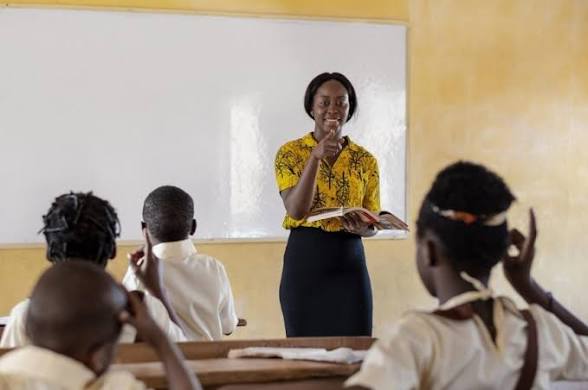
Makinde’s administration has also placed considerable emphasis on education.
The Oyo State Government reports that it scrapped education levies that had constituted a barrier for some families, increased education’s share of the state budget, upgraded schools and worked to bring children who were out of school back into the education system.
In his 2025 State of the State address, Makinde reported the completion of upgrades in 105 schools and the recruitment of over 14,000 teaching and non-teaching staff, alongside further school upgrades across the state.
These initiatives point to an important philosophy: Nigeria cannot develop sustainably if education is treated as an expense instead of an investment.
A president who understands the relationship between education, skills, employment and economic growth could help move Nigeria from merely producing graduates to producing a competitive workforce.
HEALTHCARE THAT REACHES THE PEOPLE
Another area where Makinde’s administration has sought to make a difference is healthcare.
The Omituntun Free Health Mission has provided medical outreach across Oyo State, while the administration has invested in upgrading and equipping Primary Healthcare Centres. In his 2025 address, Makinde reported that more than 209 PHCs had been upgraded under Omituntun 1.0, with 264 PHCs equipped and another 106 PHCs being upgraded across the 33 local government areas.
The administration also reported the recruitment of 3,000 medical personnel as part of its healthcare expansion under Omituntun 2.0.
This matters because healthcare should not be a privilege reserved for those who can afford expensive private hospitals. A functional government must ensure that ordinary Nigerians can access quality healthcare close to where they live.
INFRASTRUCTURE, AGRICULTURE AND ECONOMIC OPPORTUNITY
Makinde’s economic vision has also included agriculture and infrastructure.
The Fasola Agribusiness Industrial Hub was redesignated by the African Development Bank as Nigeria’s first Agricultural Transformation Centre, according to Makinde’s 2025 State of the State address. His administration also launched the Eruwa Agribusiness Transformation Centre, a large-scale project incorporating crop processing, livestock, warehousing, healthcare and other economic activities.
This is significant because Nigeria has enormous agricultural potential, yet millions of Nigerians remain economically vulnerable.
The goal should not simply be to tell young Nigerians to “go into farming.” The goal should be to build an agricultural economy where farmers have access to infrastructure, processing, storage, markets, technology and finance.
That is the kind of thinking Nigeria needs.
SECURITY AND THE CONFIDENCE TO INVEST
No economy can truly prosper without security.
Oyo State’s development roadmap reported that more than 200 kilometres of the Light Up Oyo project had been completed and linked the initiative to improved security and economic activity. The state also reported a decline in crime and improved confidence for rural communities.
Security must therefore be viewed not only as a policing issue but also as an economic issue.
When roads are safer, farms become more productive. When communities are secure, businesses can operate. When investors have confidence, jobs can be created.
A LEADER WHO UNDERSTANDS GOVERNANCE
Perhaps one of the most important qualities Nigerians should demand in 2027 is accountability.
Political leadership should not be measured only by speeches, rallies, slogans or social-media popularity. It should be measured by questions such as:
What was promised?
What was delivered?
What changed in the lives of ordinary people?
What institutions were strengthened?
What economic opportunities were created?
That is where Makinde’s record in Oyo State becomes relevant to the national conversation.
His administration has publicly presented its policies and achievements around clear development pillars and has continued to publish progress reports and roadmaps.
WHY 2027 SHOULD BE ABOUT COMPETENCE, NOT JUST POLITICS
Nigeria does not lack intelligent people.
Nigeria does not lack talented people.
Nigeria does not lack resources.
What Nigeria needs is competent leadership that can turn ideas into systems, resources into development and promises into measurable results.
The 2027 election should therefore be a contest of ideas, competence, character, experience and track record.
If Seyi Makinde seeks the presidency, Nigerians should not support him simply because he comes from Oyo State, the South-West or any political bloc.
They should examine his record.
They should question his policies.
They should compare his achievements with those of other aspirants.
And if they believe his record demonstrates the competence, discipline, inclusiveness and economic vision Nigeria needs, then they should have every right to support his ambition.
FROM OYO TO NIGERIA
The bigger question is simple:
Can the principles that have guided development in Oyo State be expanded to a country of more than 200 million people?
That is the challenge that any presidential aspirant must answer.
Nigeria needs a president who understands that government is not about the comfort of political elites. It is about the welfare of ordinary citizens.
A president who understands that roads are not just roads — they connect businesses and communities.
A president who understands that schools are not just buildings — they produce the future workforce.
A president who understands that hospitals are not just structures — they protect the lives of Nigerians.
A president who understands that agriculture is not just farming — it is an entire value chain capable of creating wealth and employment.
A president who understands that internally generated revenue, investment and industrialisation are essential to building a stronger economy.
And above all, Nigeria needs a leader whose word carries weight.
SEYI MAKINDE 2027 — LET THE RECORD SPEAK
Politics is often full of promises.
But records are different.
Records can be examined.
Records can be compared.
Records can be questioned.
And records can speak.
For many Nigerians who are searching for a new direction in 2027, Seyi Makinde presents an interesting proposition: a politician whose appeal is increasingly tied not only to what he says, but to what his supporters say he has demonstrated in governance.
The road to 2027 should not be about blind loyalty.
It should be about competence, accountability, performance and the future of Nigeria.
If Nigeria wants a president who will talk, work and stand by his word, then the Makinde question deserves a serious national conversation.
2027 is not just another election. It is an opportunity to choose the kind of leadership Nigeria wants for the next generation.
SEYI MAKINDE 2027 — FROM PROMISES TO PERFORMANCE.
A NEW CHAPTER. A NEW STANDARD. A NEW POSSIBILITY FOR NIGERIA.
Aderemi Toheeb Lawal is a member of PWD,
writes from Ibadan