














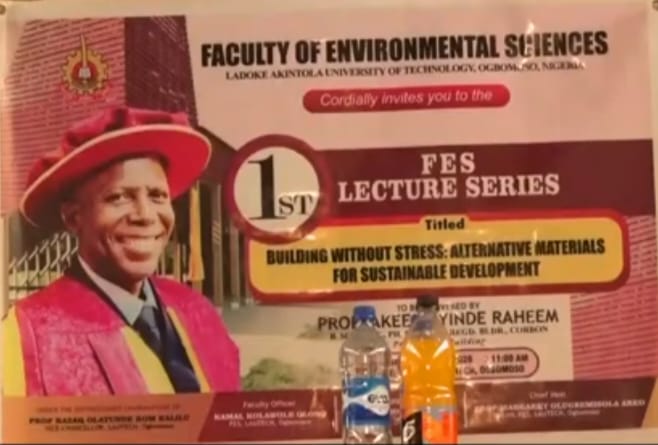
Faculty of Environmental Sciences (FES) LAUTECH Holds First Lecture Series || By Dr. Rafiu Babatunde IBRAHIM (PhD)
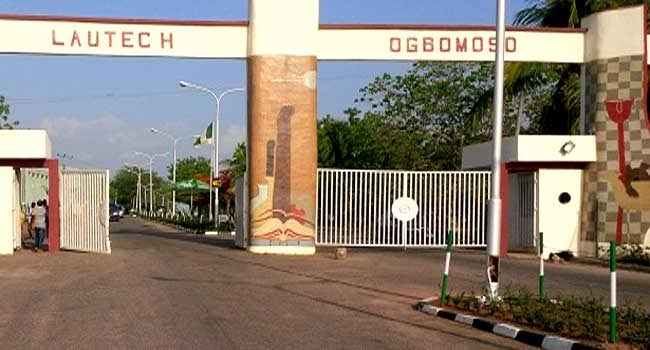
In a historic milestone, the Faculty of Environmental Sciences (FES) at Ladoke Akintola University of Technology (LAUTECH), Ogbomoso, held its maiden Faculty Lecture Series on Wednesday, April 15, 2026, at The Hall, LAUTECH, Ogbomoso.
The epoch-making lecture, titled “Building Without Stress: Alternative Materials for Sustainable Development,” was delivered by Prof. Akeem A. Raheem, Head of the Department of Building, LAUTECH.
The event marked the first-ever Faculty Staff Lecture Series since the establishment of the Faculty of Environmental Sciences over three decades ago.
A Dream Realized
In his opening remarks, Prof. Raheem expressed profound delight at presenting the maiden faculty lecture on behalf of the Building Department. He specially commended the Dean of FES, Prof. Mrs. M. O. Areo, for her compassion and relentless efforts toward the actualization of the lecture series.
“Now that we have started in FES, I want to assure you that you will hear and see more of us henceforth by the special grace of almighty GOD,” Prof. Raheem declared to a rousing applause.
The Challenge: Cost of Building Materials
Prof. Raheem, a respected researcher in cement and concrete technology, took the audience through a sobering reality: materials cost accounts for about two-thirds (2/3) of the total building cost in Nigeria. He noted that conventional building materials are largely imported and therefore very expensive, while local materials-though cheaper-suffer low acceptability due to issues of ego and perception.
“A reduction in the cost of materials would definitely bring about a huge saving in the overall building production cost,” he stated.
Spotlight on Alternative Materials
The professor presented a wide range of locally available and scientifically tested alternative materials that can significantly reduce construction stress and cost. These included:
1. Supplementary Cementitious Materials (SCM): Corn Cob Ash (CCA), Sawdust Ash (SDA), Wood Ash (WA), and Rice Husk Ash (RHA), all of which possess pozzolanic properties and can partially replace expensive ordinary Portland cement.
2. Aggregate Replacements: Palm Kernel Shell (PKS), Coconut Shell, Periwinkle Shell, and combinations of granite and gravel. He noted that a 30% replacement of granite and sharp sand with periwinkle shell yielded a cost savings of 6.8%while still meeting structural requirements.
3. Laterite Interlocking Blocks (LIB): Produced from laterite and only 5–10% cement, these blocks require no mortar for laying and no firing. Prof. Raheem revealed that using LIB brings about a 25% cost reduction per square metercompared to conventional sandcrete hollow blocks.
4. Bamboo Reinforcement: With a tensile strength-to-weight ratio 3–4 times that of steel, bamboo is not only cheap and lightweight but also environmentally friendly—releasing 35% more oxygen than an equivalent tree stand and absorbing more CO₂. A bamboo-reinforced building at the Nigeria Building and Road Research Institute (NBRRI), constructed in 2021 and treated with anti-termite chemicals and bitumen, remains standing with no signs of failure.
5. Fanpalm Reinforcement: A locally available wood from the palmacea family, found widely in Nigeria’s middle belt. Epoxy-coated fanpalm specimens recorded an ultimate tensile strength of 80.83 N/mm² after 56 days of curing in alkaline media.
6. NBRRI Pozzolana and Roofing Sheets: Developed from local clay deposits, the pozzolana replaces up to 30% of Portland limestone cement. The NBRRI roofing sheets, produced from lime, fine aggregates, cement, and water, offer a cheaper alternative for a component that accounts for 25–29% of total building cost.
Stress Reduction Principles
Beyond materials, Prof. Raheem outlined key principles for building without stress:
1. Define goals clearly
2. Set a realistic budget and timeline
3. Engage a registered builder
4. Obtain all necessary permissions
5. Choose the right type of materials
6. Maintain effective communication
A Gathering of Great Minds
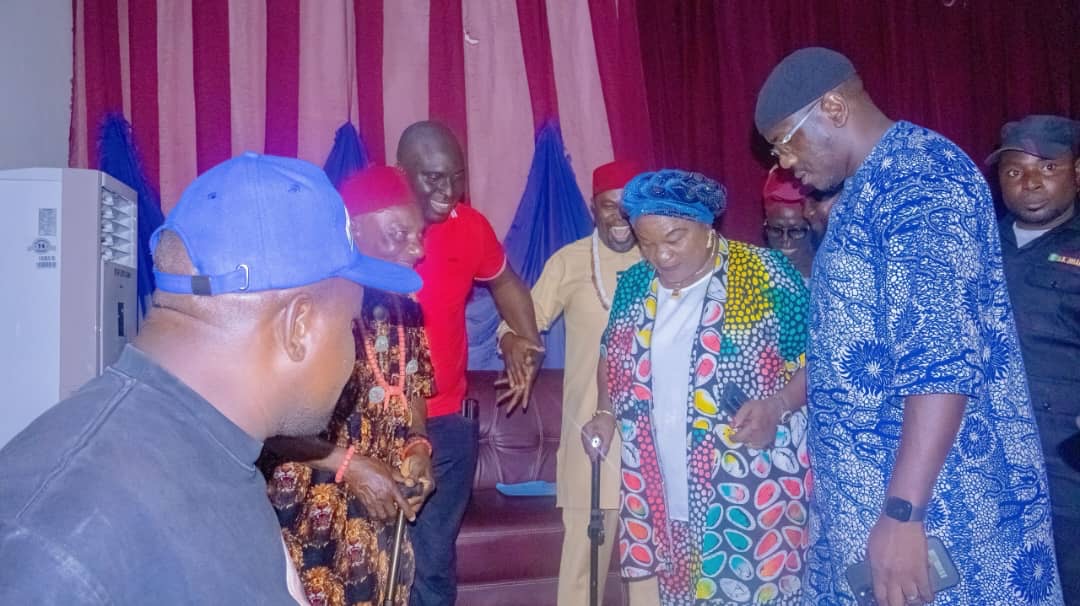
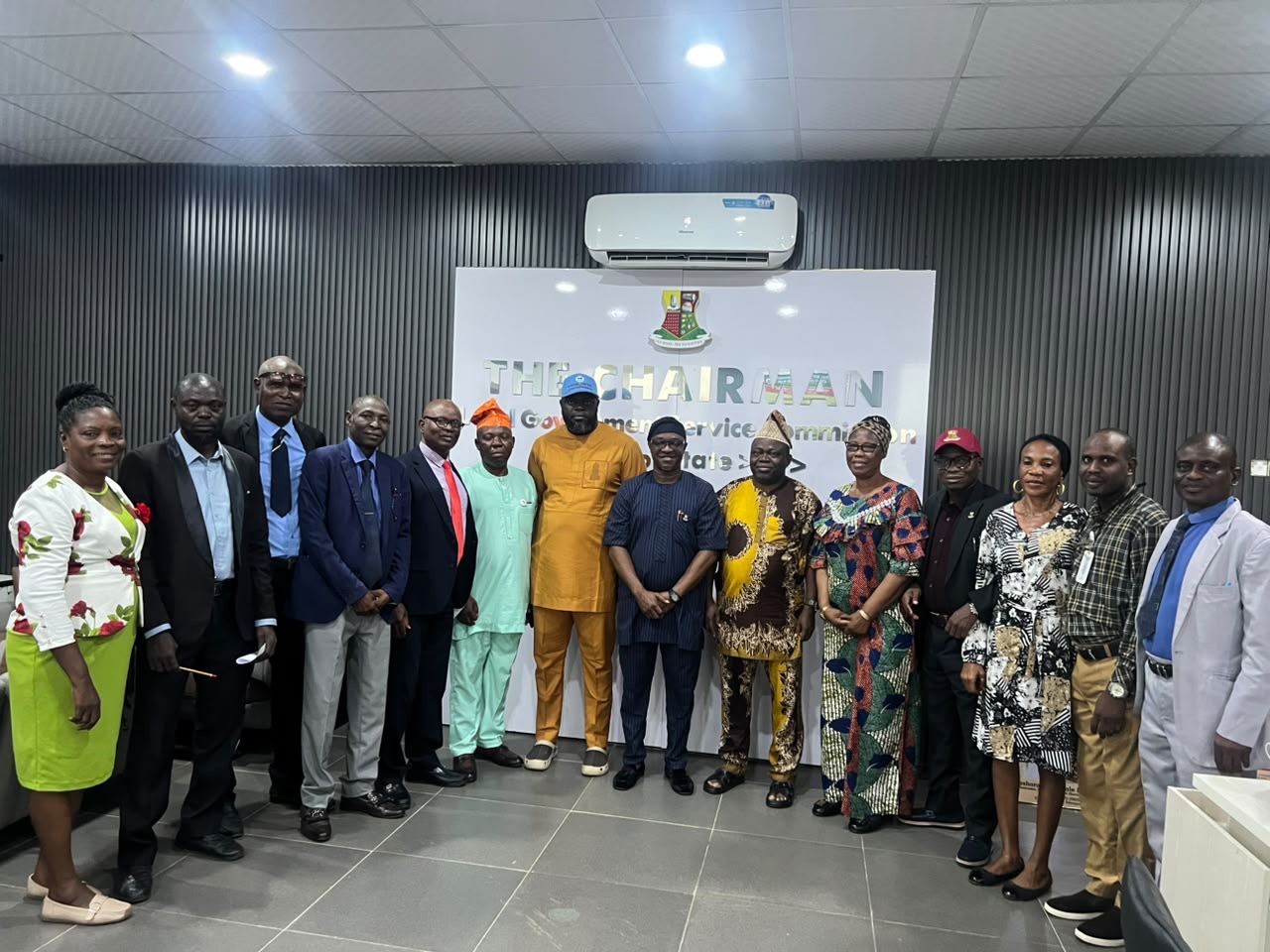
The lecture attracted a distinguished audience, including the Vice Chancellor, Deputy Vice Chancellors (Academics and Innovations; Strategy and Development), the Registrar, Bursar, Librarian, Provosts of Colleges, Deans of Faculties and Postgraduate School, Professors and members of the Senate, Heads of Departments, staff, invited guests, friends, and well-wishers, as well as the greatest Ladokites.
Prof. Raheem closed by acknowledging the university management, the Dean of FES, his mentors (including Profs. E. B. Lucas, J. O. Ojediran, I. A. Adeyemi, and others), his collaborators, the Cement and Concrete (CEMCON) Research Group, his postgraduate and undergraduate students, professional bodies (NIOB, CORBON), his spiritual family at LAUTECH Muslim Community, and his wife, Alhaja Badirat Kehinde Raheem, FCA, and all his wonderful children.
Conclusion: A Call to Action
Prof. Raheem concluded that with proper handling, the use of locally available and tested alternative materials will lead to large savings, reduce the stress of house ownership, and also aid a green environment.
“Survey the location of the structure and identify the readily available materials which can be suitably used,” he advised. “Building without stress is possible.”
The historic maiden lecture ended with a renewed hope that sustainable, affordable housing is not a distant dream but an immediate possibility-if only Nigerians would embrace their local resources.
Reported by:
Dr. Rafiu Babatunde IBRAHIM
08104294271
Dr. R. B. Ibrahim is a Senior Lecturer and currently Sabbatical Appointee, Department of Urban and Regional Planning, LAUTECH