The Federal Government on Wednesday defended its $21.7bn supplementary external borrowing plan submitted to the National Assembly, describing it as a strategic investment programme rather than debt accumulation.
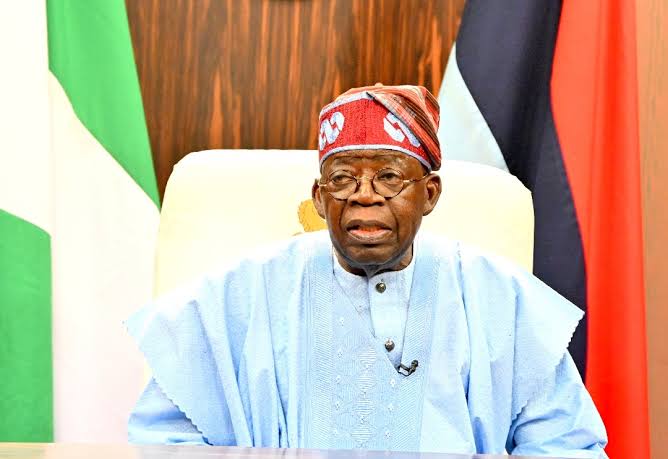
The Minister of Finance and Coordinating Minister of the Economy, Taiwo Oyedele, disclosed this while briefing State House correspondents after the Federal Executive Council meeting presided over by President Bola Tinubu in Abuja.
Oyedele said the administration it succeeded printed over N30trn, equivalent to more than $20bn at the time, and the country is still absorbing its inflationary impact.
He said he presented 10 memos which were all approved by council.
According to him, the first was a €155.9m credit facility from Deutsche Bank and other banks to upgrade 132/33kV substations under the Presidential Power Initiative Phase One to improve power reliability.
The second was a $970m syndicated term loan from Standard Chartered and Africa Finance Corporation for rolling stock on the Kano-Maradi rail line to boost freight and regional trade.
The third was a €76.8m credit from the ECOWAS Bank for Investment and Development to Bauchi State for transport infrastructure, including rural and urban roads.
The fourth was approval for non-intrusive inspection scanners for the Nigeria Customs Service to speed up cargo clearance and curb smuggling.
On the borrowing plan, Oyedele said critics were mischaracterising it.
“Altogether, if you convert the euro amount and add it to the dollar amount, it comes to $21.7bn… This does not qualify as borrowing. This qualifies as investment,” he said.
He explained that the plan covers 46 projects across 11 sectors, with 29 on concessional or blended terms.
Transportation leads with $10.6bn, including sections of the Lagos-Calabar and Sokoto-Badagry highways and Kano-Kaduna Metro Rail. Ten flagship projects account for 58% of the total at $12.5bn.
Social sectors – agriculture, energy, social protection, climate and education – totalling $4bn, will be funded entirely on concessional terms.
About $7.9bn will come from multilateral and bilateral partners, led by the World Bank with $5bn at an average rate of 2.1%. The remaining 11 lender groups include regional DFIs, export credit agencies and commercial banks. The commercial component average rate is 7.8%, below Nigeria’s November 2025 Eurobond yield of 9.1% to 9.6%.
Oyedele said $4.8bn of the total is for subnational and agency borrowing – $3.3bn directly to states and $1.45bn through agencies including Bank of Industry, Development Bank of Nigeria, TCN and DisCos.
“The Federal Government has the constitutional duty to be the interface for all external borrowing,” he said.
He likened it to private sector financing: “If Aliko Dangote was going to save money to build his refinery, it would not have been built in his lifetime.”
On economy and food prices
Oyedele said the economy was weeks away from collapse in May 2023, with inflation at 22.41%, net reserves at $859m, FX premium over 60%, debt service consuming 97% of revenue, and 27 states unable to pay salaries.
He said growth has accelerated from 2.74% in May 2023 to 4.43% in Q2 2026, with dollar-term growth at 17% in H1 2026. Inflation fell to 14.63% in September 2026 from 20.98% a year earlier and a peak of about 34%.
He said foreign reserves have risen to over $55bn – an 18-year high – with net reserves now over $45bn, up from less than $1bn three years ago. The naira, trading at N1,330-N1,350/$, is about 25% undervalued according to IMF estimates.
Tax-to-GDP rose from 7% in 2023 to 12.5% at end-2025, while debt service-to-revenue fell from 97% to under 60%.
On food prices, he said council adopted a resolution to stabilise prices of rice, yam, beans and maize through the NEC 90-day action plan, including mapping production gaps and targeted import of unprocessed brown rice to preserve local milling.
Council also adopted a target of single-digit inflation by end of 2027.
He listed interventions including N372.6bn disbursed through NELFUND to over 1.5m students, over N600bn cash transfers to more than 10m households, and tax exemptions for low-income earners up to N100,000 monthly and small businesses with turnover not more than N100m.
Oyedele’s defence comes amid criticism of the loan plan, including calls by ADC presidential candidate Atiku Abubakar for the National Assembly to suspend consideration until project details are made public.