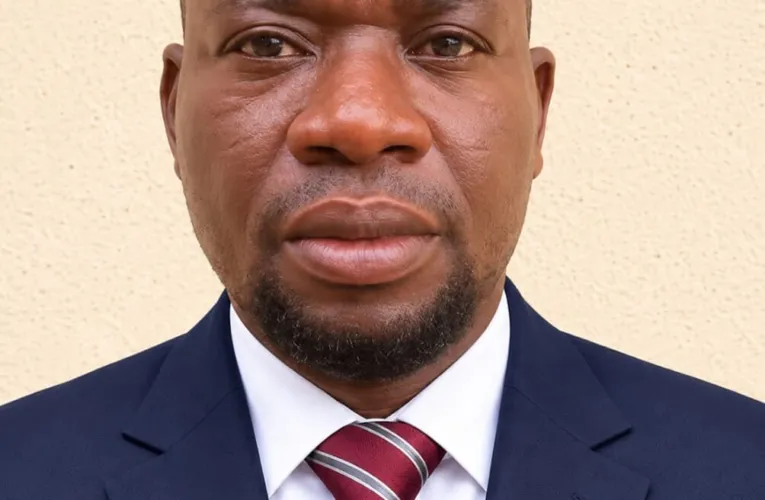
Infrastructure Development Planner and Senior Lecturer, Department of Urban and Regional Planning, Osun State University, Osogbo, Nigeria.
Introduction: A nation must not mortgage its future to political violence
Nigeria is once again approaching a critical moment in its democratic journey. As preparations intensify towards the 2027 general elections, the country is witnessing disturbing reports of politically motivated attacks, intimidation, shootings, destruction of property, assaults on political supporters and disruptions of campaign activities. Across different parts of the country, the growing atmosphere of hostility is raising serious concerns about the safety of citizens, the credibility of the electoral process and the stability of the nation.
Political competition is an essential component of democratic governance. Different political parties and candidates are entitled to canvass for votes, promote their manifestoes, criticise government policies and persuade citizens to support their programmes. However, political competition becomes dangerous when disagreements are settled through violence, intimidation, destruction and the deliberate deployment of armed individuals against perceived opponents.
The issue should not be regarded merely as a political disagreement between rival parties. It is a national development challenge with far-reaching consequences for human security, economic productivity, infrastructure investment, urban stability and the future of Nigerian democracy.
From the perspective of infrastructure development planning, the increasing incidence of political violence is particularly disturbing because development depends on a stable environment, predictable institutions, protected investments and the confidence of citizens. Roads, bridges, hospitals, schools, markets, electricity facilities, water infrastructure and other public assets cannot be sustainably developed in an environment where violence threatens lives, destroys property and undermines institutional stability.
The fundamental question is therefore not simply whether Nigeria can conduct another general election. It is whether the country can conduct its elections without sacrificing the lives, livelihoods, infrastructure and development opportunities of its citizens.
The emerging situation: What do the statistics tell us?
The growing concerns about political violence are supported by recent monitoring reports.
According to the Kimpact Development Initiative (KDI), its Nigeria Election Violence Education and Reporting (NEVER) Project documented 124 incidents of electoral violence, resulting in 22 fatalities, between 1 July and 23 November 2026. The incidents reportedly affected 35 states and the Federal Capital Territory. They included intimidation, physical assaults, kidnappings, shootings, violent rhetoric and destruction of campaign infrastructure. This is particularly significant because the incidents were recorded before the 2027 general elections had taken place. It suggests that the potential consequences of electoral competition are already being felt in communities across the country.
The National Peace Committee also reported 109 violations of the National Peace Accord across 26 states and the FCT during a ten-week monitoring exercise between 19 August and 27 October 2026. Political violence and thuggery accounted for 33 reported violations, while misinformation and disinformation accounted for 29.
The Centre for Democracy and Development’s October 2026 Nigeria Election Security Tracker recorded 173 security incidents during the month. Of these, 16 were election-related, while 157 were associated with broader insecurity. The tracker also recorded 640 deaths across the combined security situation. It is important to clarify that these 640 deaths cannot be attributed exclusively to electoral violence; they reflect the wider security environment.
The INEC Chairman, Prof. Joash Amupitan, mentioned nine states that are currently experiencing political violence. He disclosed this on Thursday, 26 November, 2026 at the INEC–ONSA Strategic Election Security Conference in Abuja. The nine states are: Lagos, Edo, Ekiti, Enugu, Ebonyi, Delta, Cross River, Oyo, and Benue. According to him, these are reported states where campaign convoys, town hall meetings, party offices, and supporters have come under attack since the commencement of open campaigns in August 2026. It is worth pointing out that a separate report by the Kimpact Development Initiative (KDI) released around the same time identified a slightly different list of “leading flashpoints” including: Kano, Delta, Rivers, Ondo, and Kebbi, based on their own data tracking of violent incidents.
These statistics demonstrate the importance of distinguishing politically motivated violence from other forms of insecurity. Nevertheless, the interaction between political tensions, criminal networks, communal disputes and existing security challenges makes the situation particularly complex.
The geographical spread of reported incidents also raises concern. While the nature and intensity of insecurity differ across Nigeria’s geopolitical zones, no region should be regarded as completely insulated from the potential consequences of politically motivated violence.
What should particularly concern policymakers is the possibility that isolated incidents may escalate into organised attacks, retaliatory violence and wider community instability if preventive measures are not introduced promptly.
Does Nigeria have a history of political and electoral violence?
Unfortunately, political violence is not new to Nigeria. The country has a long history of electoral disturbances, political intimidation, assassinations, destruction of property and violent competition for political power. The experience predates the present Fourth Republic. Nigeria’s First Republic was characterised by serious political tensions and regional rivalries, particularly in the Western Region, where political disagreements contributed to widespread violence and instability during the 1960s. The political crisis of that period was among the factors that contributed to the weakening of democratic institutions and the eventual military intervention in January 1966. Since the return to democratic governance in 1999, the country has continued to experience different forms of electoral violence.
The 2003 general elections were associated with serious violence, with Human Rights Watch reporting at least 100 deaths. The 2007 general elections were also characterised by widespread irregularities and violence, with Human Rights Watch estimating that at least 300 people were killed in election-related incidents.
However, the 2011 general elections remain one of the most disturbing episodes in Nigeria’s recent electoral history. Following the announcement of the presidential election results, protests and violent attacks spread across several northern states. Human Rights Watch reported that more than 800 people were killed in the post-election violence. The crisis also resulted in widespread displacement, destruction of property and attacks on places of worship. The 2015 and 2019 elections also experienced political violence, although the scale and geographical distribution differed. The International Republican Institute and National Democratic Institute (IRI/NDI), in their final report on the 2023 general elections, provided comparative figures for three election cycles:
Election cycle
LGAs experiencing election violence
Recorded incidents
Fatalities
2015
134
273
498
2019
187
347
224
2023
274
586
348
These figures indicate that the 2023 election cycle recorded the highest number of incidents and affected local government areas among the three periods compared, although the 2015 cycle recorded the highest fatalities.
The figures should be interpreted within the methodology and reporting period used by the IRI/NDI observation mission. They are not necessarily directly comparable with other monitoring organisations’ estimates.
The African continent’s most populous country has therefore experienced repeated cycles of electoral violence. The concern is that lessons from previous elections have not translated into sufficiently effective preventive mechanisms. Nigeria must not allow the 2027 general elections to become another chapter in this unfortunate history.
Why does political violence persist?
Understanding the underlying factors is essential to developing effective interventions. Political violence does not emerge in isolation. It is often connected to structural weaknesses within the political, economic, institutional and social environment.
- The struggle for political power and control of public resources: Political offices in Nigeria are associated with considerable influence over public appointments, contracts, budgetary allocations, land administration and development priorities. Where political competition is perceived as a struggle for access to economic opportunities and public resources, some individuals may resort to intimidation and violence to secure political advantage. This situation becomes particularly dangerous when political actors regard electoral victory as an opportunity to control public resources rather than as a responsibility to serve the population.
- Youth unemployment and the exploitation of vulnerable populations: The availability of unemployed and economically vulnerable young people creates conditions that can be exploited by individuals seeking to mobilise political violence. Some young people may be recruited as political enforcers, campaign disruptors or instruments of intimidation.
- This does not mean that unemployed young people are inherently violent. Rather, economic vulnerability, limited opportunities, weak social protection and political manipulation can increase exposure to recruitment into violent activities.
- Weak enforcement of electoral laws: The persistent failure to investigate and prosecute individuals who sponsor, organise or participate in electoral violence encourages impunity. When perpetrators believe that their political connections or financial influence will protect them from prosecution, the deterrent effect of the law is weakened. The problem is not necessarily the absence of laws alone, but also the consistency, independence and effectiveness of enforcement.
- Hate speech, misinformation and political intolerance: The spread of inflammatory statements, fabricated information, ethnic hostility and religious intolerance can deepen divisions among communities. Social media platforms have made it possible for unverified information and provocative messages to circulate rapidly. When political disagreements are framed as ethnic, religious or regional confrontations, the risk of retaliatory attacks increases.
- Poverty, inequality and competition over limited opportunities: Economic hardship, rising living costs, unemployment and unequal access to public services can deepen public frustration. Political actors may exploit these grievances, turning legitimate demands for better governance into confrontations between rival groups.
- The proliferation of armed groups and criminal networks: Nigeria’s wider security challenges, including banditry, kidnapping, communal conflicts, insurgency and organised criminal activities, complicate the management of electoral security. Where criminal networks overlap with political interests, the distinction between political intimidation and ordinary criminal violence can become difficult to establish. These factors reinforce one another. Consequently, addressing political violence requires more than deploying security personnel during campaign rallies and election days.
Political violence as a threat to human development
The most immediate consequence of political violence is the loss of human lives. Every death represents the destruction of human potential, family stability, economic contribution and social relationships. The victims may include political supporters, traders, transport operators, civil servants, students, artisans, journalists, security personnel and innocent residents who have no direct involvement in political competition.
The effects extend far beyond the immediate victims.
- Loss of human capital: Deaths and permanent injuries reduce the productive capacity of individuals and communities. Families lose breadwinners, children lose parental support, and households may become dependent on relatives or public assistance.
- Disruption of education: Political violence can force schools to close, discourage attendance and expose students and teachers to insecurity. Children growing up in violent environments may experience interrupted education, psychological distress and reduced opportunities for future employment.
- Deterioration of public health: Violence places additional pressure on hospitals and emergency services. Injured persons require immediate medical attention, while fear and displacement may interrupt access to routine healthcare, maternal services and immunisation.
- Displacement and loss of livelihoods: Residents may abandon their homes, farms, shops and businesses because of threats to their safety. Displaced households often lose access to land, employment, education and essential services.
- Psychological and social consequences: Persistent threats and violent attacks create fear, distrust, trauma and hostility. Communities that previously maintained peaceful relationships may become divided along political, ethnic or religious lines.
The United Nations High Commissioner for Refugees (UNHCR) estimates that Nigeria hosts approximately 3.5 million internally displaced persons. This figure reflects multiple drivers, including conflict, communal violence, climate-related shocks and economic pressures; it must not be interpreted as the number displaced by electoral violence. Nevertheless, it demonstrates the substantial humanitarian and institutional burden that prolonged insecurity can create.
The implications for infrastructure development
As an infrastructure development planner, I consider the potential implications of political violence for Nigeria’s physical development particularly serious. Infrastructure development is not simply the construction of roads, bridges, schools, hospitals and other physical facilities. It involves the coordinated planning, financing, construction, operation, maintenance and protection of assets that support economic activities and human welfare. Violence threatens every stage of this process.
- Destruction of existing infrastructure and public assets: Political violence can result in the burning, vandalism, looting and destruction of public buildings, vehicles, markets, community facilities and other infrastructure. Government offices, party offices, electoral facilities, transport terminals and commercial properties may become targets during violent confrontations. Where public assets are destroyed, governments are compelled to divert scarce resources from new development projects towards emergency repairs and reconstruction. This creates an additional financial burden for governments already facing competing demands for infrastructure investment.
- Disruption of infrastructure project implementation: Road construction, bridge rehabilitation, water supply projects, housing schemes, electricity installations and other development programmes require a stable operating environment. Political violence can disrupt construction activities, restrict access to project sites, threaten contractors and workers, and interrupt the movement of construction materials. Contractors may abandon projects or demand additional security arrangements and risk-related payments. These circumstances can increase project costs, extend construction periods and undermine value for money.
- Reduced private-sector investment: Investors generally require security, institutional predictability and confidence in the protection of their assets. Persistent political violence can discourage investment in manufacturing, housing, commercial property, logistics, hospitality, tourism and other productive sectors. Businesses may postpone expansion plans, relocate operations or reduce their exposure to areas considered unsafe. The consequences include reduced employment opportunities, lower business productivity and weakened economic growth.
- Disruption of transportation and logistics systems: Roads, railways, airports, seaports and inland transport facilities are essential components of national development. Violent confrontations can obstruct road corridors, disrupt public transport, damage vehicles and discourage the movement of goods and passengers. For an economy that depends heavily on road transportation, prolonged insecurity can increase logistics costs, affect agricultural supply chains and disrupt access to markets. The effects may be particularly serious in rural communities where alternative transport routes are limited.
- Increased pressure on public expenditure: Government expenditure is limited, and every naira spent on reconstruction and emergency security represents resources that could otherwise support education, healthcare, housing, water supply, transportation and other development priorities. Where violence becomes persistent, public expenditure may increasingly shift towards emergency response, security operations, rehabilitation and compensation. This creates an opportunity cost that can undermine long-term development planning.
- Damage to Urban and Regional Development: Political violence can alter settlement patterns, discourage commercial activities, weaken neighbourhood economies and contribute to the abandonment of residential and business locations. Areas affected by repeated violence may experience declining property values, reduced business occupancy and deterioration of public spaces. In the long term, this can weaken urban regeneration initiatives, discourage new development and deepen spatial inequalities between relatively secure and insecure communities.
- Damage to critical social infrastructure: Schools, hospitals, markets, water facilities, electricity installations and communication networks are essential to the functioning of communities. When these facilities are attacked, occupied or rendered inaccessible, the effects extend beyond physical damage. They interrupt the delivery of essential services and reduce the resilience of communities. The European Union Agency for Asylum, drawing on conflict-monitoring information, has documented conflict-related damage to roads, bridges, communication lines, schools, hospitals, healthcare centres, markets and private property in Nigeria. Although this evidence concerns Nigeria’s wider security crisis rather than electoral violence alone, it demonstrates the scale of infrastructure vulnerability under conditions of insecurity.
The wider economic and national development implications
Political violence can undermine Nigeria’s development prospects through several interconnected channels. First, it weakens the confidence of domestic and international investors. Investment decisions are influenced not only by market opportunities but also by the security of personnel, assets and supply chains. Second, it threatens employment generation. When businesses close, construction projects are suspended and commercial activities decline, workers lose income and households become more vulnerable. Third, it can deepen poverty and inequality. Low-income households are often less capable of absorbing the financial consequences of displacement, property destruction, medical expenses and business interruption. Fourth, it can weaken national cohesion. Persistent violence may encourage political, ethnic and religious divisions, thereby undermining the collective commitment required for national development.
Finally, political violence can weaken democratic institutions. When citizens are intimidated or prevented from participating in elections, the legitimacy of democratic processes and public institutions may be questioned. The consequences can become intergenerational. Children who lose access to education, families who lose their livelihoods and communities that experience repeated displacement may require many years of intervention before recovering their previous development trajectory.
What must be done? Moving from condemnation to practical action
The growing security concerns ahead of the 2027 general elections require urgent, coordinated and measurable interventions. The responsibility does not rest on the government alone. Political parties, security agencies, electoral institutions, traditional rulers, religious leaders, civil society organisations, professional bodies, the media and citizens all have important roles to play.
- Political parties must demonstrate responsible leadership: Political parties and their candidates must publicly reject violence, intimidation, hate speech and the recruitment of armed individuals. Party leadership should establish internal disciplinary mechanisms to sanction members who organise or encourage violent activities. Political parties must also ensure that campaign activities are conducted peacefully and that supporters are not mobilised to attack opponents. The signing of peace accords should not be treated as a ceremonial exercise. It must be supported by clear commitments, monitoring and consequences for violations.
- Security agencies must adopt preventive and intelligence-led strategies: The Nigeria Police Force and other relevant security agencies should strengthen intelligence gathering, risk assessment and preventive deployment in areas identified as potential flashpoints. Security arrangements should cover campaign venues, party offices, candidate movements, public gatherings, electoral materials and vulnerable communities. However, security operations must remain impartial, professional and consistent with human rights standards. The protection of peaceful political participation is as important as the prevention of violence.
- INEC must strengthen electoral security coordination: The Independent National Electoral Commission should continue working with security agencies, political parties and relevant stakeholders to identify emerging threats to the electoral process. Electoral materials, collation centres, registration facilities and election personnel must receive adequate protection. INEC should also strengthen communication with the public to reduce uncertainty and prevent misinformation from escalating into violence.
- Perpetrators and sponsors must be held accountable: The investigation and prosecution of individuals involved in electoral violence must be pursued without discrimination. The law should apply equally to political officeholders, party officials, wealthy sponsors, armed operatives and ordinary participants. Accountability should extend beyond those who physically carry out attacks to individuals who finance, organise, encourage or facilitate them where evidence establishes their involvement.
- Youth development must become a central component of violence prevention: Government should intensify investment in vocational education, entrepreneurship, technical skills, digital employment, sports and other productive opportunities for young people. Youth development programmes should be designed around the actual economic conditions of local communities. Young people should be encouraged to participate in democratic processes through peaceful advocacy, public debate, policy engagement and community development rather than intimidation and violence.
- Traditional and religious institutions should promote peace: Traditional rulers, religious leaders and community organisations remain important stakeholders in conflict prevention. They should use their influence to discourage inflammatory rhetoric, promote inter-community dialogue and encourage peaceful political participation. Community-based early-warning mechanisms should also be strengthened so that emerging threats can be reported and addressed before they escalate.
- The media must practise responsible reporting: The media has a critical responsibility to inform citizens accurately without sensationalising incidents or amplifying unverified claims. Journalists should verify information before publication, avoid language that encourages ethnic or religious hostility and provide balanced coverage of political activities. Digital platforms and social media users should also avoid circulating fabricated videos, inflammatory messages and misleading reports.
- Government must protect existing infrastructure and development investments: Federal, state and local governments should incorporate security risk assessments into infrastructure planning and project implementation. Critical infrastructure, including roads, bridges, electricity installations, water facilities, hospitals, schools and communication networks, should be protected through appropriate risk-management arrangements. Infrastructure projects in vulnerable areas should include contingency planning, emergency access arrangements, asset protection measures and continuity strategies. Furthermore, governments should maintain reliable records of damaged infrastructure and establish transparent procedures for assessing reconstruction costs and prioritising rehabilitation.
- Civil society and professional organisations should support independent monitoring: Professional organisations, universities, development institutions and civil society groups should support evidence-based monitoring of electoral violence and its consequences. Urban and regional planners, engineers, economists, sociologists, security experts and development practitioners can contribute to understanding the spatial distribution of violence, infrastructure vulnerability, displacement patterns and the economic consequences of insecurity. Such collaboration can support more effective preventive planning and policy implementation.
The Role of Infrastructure Development Planners in Conflict Prevention
Infrastructure development planners have an important role in promoting peaceful, inclusive and resilient communities. Planning decisions influence the distribution of public facilities, access to economic opportunities, movement patterns, settlement expansion and the relationship between communities and available resources. Poorly planned development can sometimes intensify competition over land, housing, transport corridors, markets and public facilities. Conversely, inclusive and participatory planning can help reduce grievances associated with unequal access to infrastructure and development opportunities. Planners should therefore promote equitable infrastructure distribution, accessible public facilities, functional transportation networks, adequate public spaces and inclusive community participation.
In areas affected by insecurity, spatial development plans should incorporate vulnerability assessments, safe access routes, emergency facilities, alternative service-delivery arrangements and strategies for the continuity of essential services. The protection of infrastructure should also be treated as an integral part of sustainable development planning, rather than as an issue to be considered only after an incident has occurred. Ultimately, development planning must recognise that infrastructure is not merely a collection of physical assets. It is a foundation for human welfare, economic productivity, social integration and national stability.
Conclusion: Nigeria must choose development over destruction
Nigeria stands at an important point in its democratic and development journey. The 2027 general elections should provide an opportunity for citizens to exercise their constitutional rights, assess political programmes and choose their representatives through peaceful and credible processes. They must not become an avenue for the destruction of human lives, public assets, private investments and community relationships. The historical evidence is clear: Nigeria has repeatedly paid a heavy price for electoral violence. The lessons of 2003, 2007, 2011, 2015, 2019 and 2023 should compel political leaders and public institutions to strengthen preventive mechanisms rather than wait for another major crisis before responding.
The cost of political violence cannot be measured only in the number of people killed or the monetary value of property destroyed. It must also include interrupted education, lost livelihoods, abandoned businesses, displaced households, weakened institutions, delayed infrastructure projects, reduced investor confidence and the erosion of national cohesion. A country cannot achieve sustainable development while its citizens live in fear of political confrontation. Neither can it build modern cities, functional transportation systems, effective healthcare facilities, quality educational institutions and productive communities where violence repeatedly undermines public investment and human security.
The responsibility for preventing this outcome belongs to all Nigerians, particularly political leaders and institutions entrusted with the management of public affairs. The government must act decisively. Political parties must demonstrate restraint. Security agencies must remain impartial and professional. The judiciary must ensure timely and fair administration of justice. Civil society must sustain independent monitoring, while citizens must reject the manipulation of political, ethnic and religious differences for violent purposes.
Most importantly, Nigeria must recognise that the protection of human life and public infrastructure is a fundamental condition for sustainable development. Political power is temporary, but the consequences of violence can last for generations. No political ambition is worth the life of a Nigerian, and no electoral victory is worth the destruction of the nation’s development future. The time to prevent another cycle of electoral violence is now. Nigeria must choose dialogue over confrontation, accountability over impunity, inclusion over division, and development over destruction.
Dr. R. B. Ibrahim (08104294271) (https://bit.ly/rafiuibrahim) is an Infrastructure Development Planner and Public Affairs Analyst. He writes from Ogbomoso, Oyo State, Nigeria.