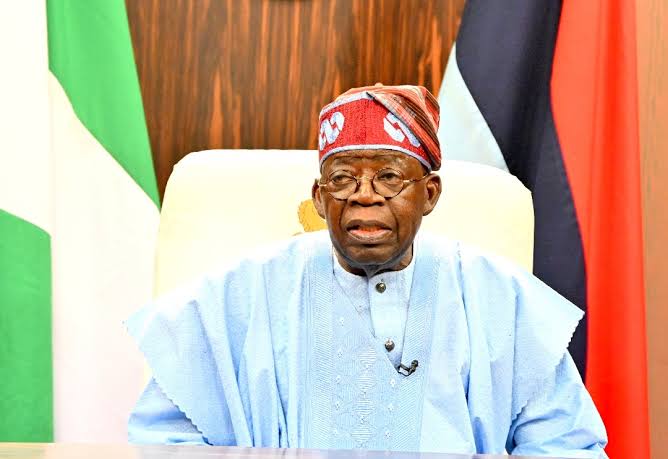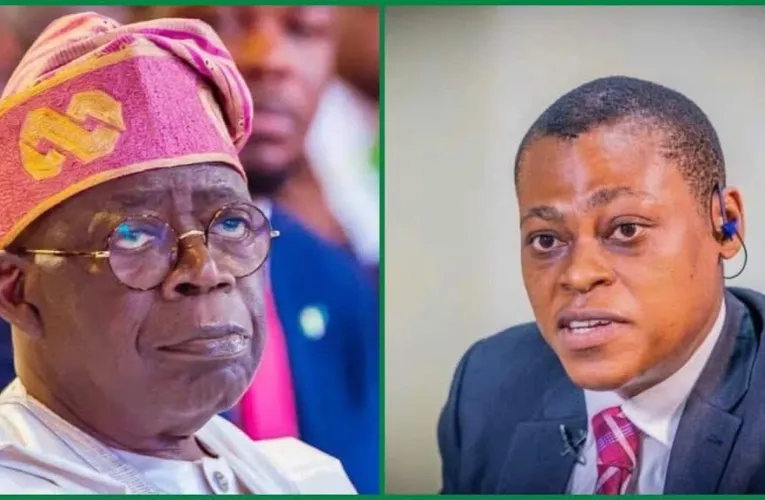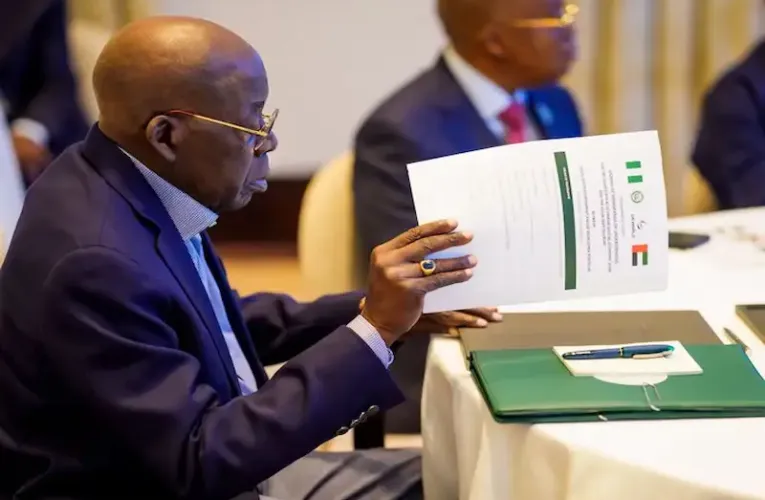
President Bola Tinubu has said Nigeria’s ambition to build a $1 trillion economy by 2030 will depend heavily on sustained investment in infrastructure, technology-enabled systems and productive capacity.
Tinubu made the assertion in an essay titled “From Reforms to Delivery: Our Infrastructure Investment and Growth Strategy,” where he defended the government’s borrowing plans and argued that financing should be directed towards projects capable of generating long-term economic value.
The President identified electricity grid upgrades, modernisation of commercial ports, major highways and investments in healthcare, education and vocational training as critical components of the strategy.
From a technology perspective, Tinubu said upgrading Nigeria’s electricity infrastructure would be essential to improving productivity and supporting businesses that depend on reliable power and digital technologies.
He also linked improved transportation and port infrastructure to the development of more efficient supply chains, saying better connectivity would reduce logistics costs, connect economic regions and unlock opportunities for agriculture and industry.
The President said the Lagos-Calabar Coastal Highway alone could reduce logistics costs along its corridor by 15 to 20 percent and potentially contribute up to two percent to Nigeria’s GDP through increased trade, tourism and industrial activity.
He stressed that Nigeria could not achieve a $1 trillion economy with infrastructure designed for an economy that is only a fraction of that size.
“We are not simply building highways. We are opening economic corridors, connecting markets, unlocking industries and reshaping Nigeria’s economic geography,” Tinubu said.
The President also highlighted investments in education and vocational training, pointing to the need to develop the human capital required to support a more productive and technology-driven economy.
According to Tinubu, economic reforms introduced since May 2023 have helped improve macroeconomic stability and strengthen Nigeria’s position in international financial markets.
He said real GDP growth reached 4.43 percent in the second quarter of 2026, while headline inflation fell to 14.63 percent in September from 20.98 percent a year earlier.
Tinubu added that Nigeria’s gross external reserves stood at $55.1 billion as of October 9, including about $46 billion in net reserves, while the tax-to-GDP ratio increased to 12.5 percent from seven percent.
The President said improved investor confidence could enable Nigeria to attract longer-term financing for infrastructure and productive investments.
He argued that public borrowing should increasingly move away from financing short-term fiscal pressures towards projects capable of creating jobs, expanding economic opportunities and generating returns for future generations.
Tinubu further said longer-term financing arrangements would be used to match the lifespan of infrastructure assets, reduce refinancing pressures and secure more competitive funding.
He identified the completion of high-impact projects and investment in critical infrastructure as one of five priorities for the next phase of the Federal Executive Council’s economic strategy.
The other priorities include food affordability and energy price stability, fiscal discipline, improved economic policy and regulatory efficiency, as well as targeted household support and investment in human development.
The President said the success of the government’s economic strategy would ultimately be measured by completed infrastructure, increased investment, employment generation and improved living standards.
“Securing financing is not the achievement. Completing the project, delivering value and improving the lives of Nigerians is the achievement,” he said.