





















Families of Fallen US Troops Fight for Benefits Amid Dispute Over “War” with Iran
The families of US service members killed in US-Israeli strikes against Iran are fighting to secure the pay and benefits owed to their loved ones, as confusion over official war classifications complicates their claims.
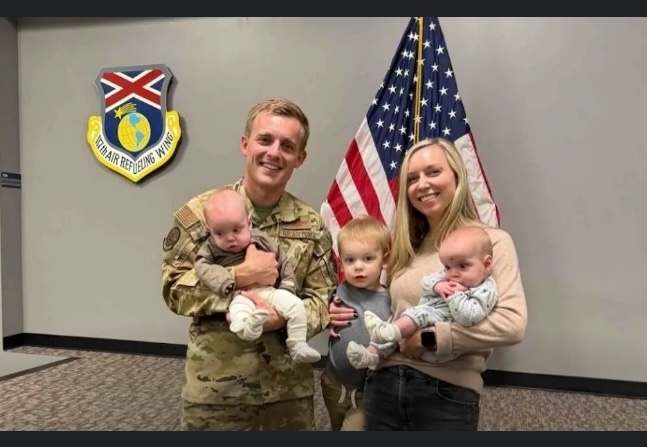
Libby Klinner, a widow, said on social media that the US Air Force initially deemed her ineligible for additional benefits after the death of her husband, Maj. Alex Klinner, 33, because Congress had not formally declared war.
Maj. Klinner was one of six crew members aboard a KC-135 refueling aircraft that crashed in western Iraq in March while supporting US strikes targeting Iran.
Since operations against Iran began more than six months ago, 18 US service members have been killed and 780 wounded, according to Defense Department data.
“My husband lost his life because we’re in a war – and then I was told that because it’s not technically a war, we lose out on something,” Ms. Klinner told the Associated Press. “It all comes down to principle.”
After her post went viral, the Air Force clarified that Maj. Klinner’s final paycheck included hazard pay and combat-related tax benefits.
US officials later acknowledged they had provided inaccurate information. They said his final pay did include “combat pay” of $225 per month, which is not contingent on a formal declaration of war, but it was incorrectly itemized.
“What this experience made clear to me is how difficult it can be for a grieving family to navigate classifications, terminology and government processes at the very moment we are least equipped to do so,” Ms. Klinner said in a statement.
“No Gold Star family should have to become an expert in government language to understand what they are entitled to. Alex understood the risks that came with his service, and he trusted that if the worst happened, his family would be taken care of.”
Eligibility for US service member pay and benefits depends on factors such as deployment location and duty status. In practice, paychecks can change multiple times a year, leading to confusion and administrative errors, officials said.
“I want the conversation to focus on making sure every family facing an unimaginable loss has that same clarity from the start,” Ms. Klinner said. “Getting this right for the families left behind isn’t a footnote – it’s part of how we honour the service and sacrifice of those we lost.”
Vice President JD Vance was asked about her case at a White House briefing on Thursday.
“We want to be as helpful as we can and ensure she gets everything that she is entitled to,” Mr. Vance said. “My message to her would be: ‘We love you, we’re grateful for the sacrifice, and we take very seriously our commitment to get you what you need.’”
Pressed on whether US operations in Iran constitute a war, Mr. Vance said there was “no active shooting.”
President Donald Trump has repeatedly called the US military operations against Iran a “war.” But on Friday he appeared to align with Mr. Vance, describing the strikes as “intermittent.”
“A lot of people don’t call it a war. I call it a military conflict, because it’s small potatoes for us,” Mr. Trump said.
Other military families have also accused the Pentagon of downplaying the extent of injuries and of not classifying troops as combat casualties. The US Army has denied the claims.
The military has generally been slow to disclose injury figures. US Central Command is not required to release such data, particularly if personnel return to duty shortly afterward.
Mr. Trump has met with some families of fallen troops, including Shari Feehan, mother of 1st Lt. Tyler James Feehan, 25.
“He talked to me as a mother who lost her son,” Ms. Feehan said. “He saw the devastation. He witnessed that, and so he knows.”