














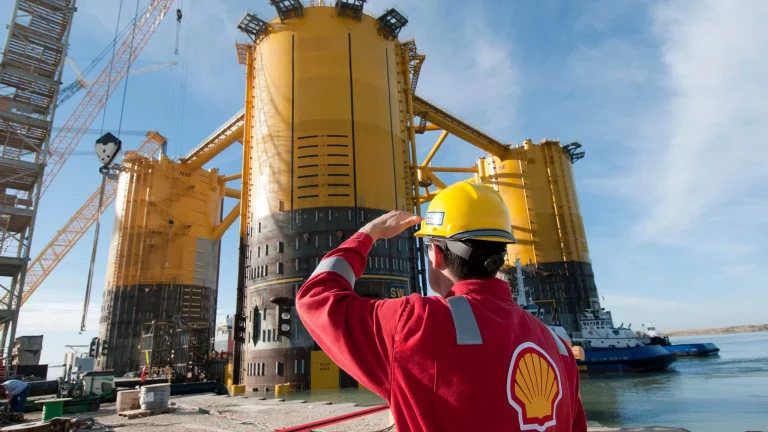
FG approves $11.50 tax credit per barrel for Shell’s Bonga Southwest Aparo project
The Federal Government has approved a special production-linked tax credit for Shell Plc’s Bonga Southwest Aparo deepwater oil project in a move aimed at unlocking an estimated $20 billion in investment and accelerating Nigeria’s crude oil production.
According to a Bloomberg report published on Tuesday, President Bola Tinubu approved new fiscal terms granting Shell and its partners a tax rebate of $11.50 for every barrel of crude oil produced from the project. This is more than double the standard incentive currently available under Nigeria’s fiscal framework.
The report, citing sources familiar with the matter, said the enhanced tax credit is expected to help move the long-delayed Bonga Southwest Aparo project toward a Final Investment Decision, FID.
The sources added that the same production-linked tax incentive would be extended to other international oil companies developing new deepwater projects in Nigeria and would remain in effect until at least 2029.
*$20bn project to boost output*
The Bonga Southwest Aparo project is one of Nigeria’s largest undeveloped deepwater oil fields and is projected to attract approximately $20 billion in foreign direct investment.
According to the Nigerian National Petroleum Company Limited, NNPCL, the project is expected to produce about 150,000 barrels of crude oil per day when operations commence, significantly increasing Nigeria’s oil production capacity.
Responding to enquiries, a Shell spokesperson confirmed that work on the project is progressing.
“Shell continues to progress the Bonga Southwest Aparo project toward development and will communicate material updates through official channels,” the spokesperson said.
Officials of the NNPCL and the Office of the President’s Special Adviser on Energy did not comment on the development.
*Part of broader oil sector reforms*
The incentive forms part of the Tinubu administration’s ongoing reforms to revive Nigeria’s petroleum industry, which has suffered years of declining investment due to crude oil theft, pipeline vandalism, insecurity, ageing infrastructure and regulatory uncertainty.
Since assuming office in May 2023, the Federal Government has introduced several executive orders aimed at improving Nigeria’s competitiveness, attracting fresh investment and unlocking stalled oil and gas projects.
An earlier executive order limited production tax credits to 20 per cent of a licence holder’s annual tax liability to offset operating costs.
Industry stakeholders believe the enhanced tax credit will improve the commercial viability of deepwater projects, where production costs are considerably higher than those of onshore operations.
*Oil production rises to 1.56mbpd*
The development comes as Nigeria records steady improvements in crude oil production.
Figures released by the Nigerian Upstream Petroleum Regulatory Commission, NUPRC, showed that the country’s crude oil production rose to an average of 1.56 million barrels per day in June 2026, the highest monthly output since April 2020.
The increase has been attributed to improved security around oil infrastructure, renewed upstream investments and ongoing government reforms.
*Investors seek legal certainty*
Despite the new incentives, concerns remain over the long-term stability of executive orders, which can be amended or challenged by future administrations.
According to the Bloomberg report, Shell has requested that the Federal Government publish the tax-credit order in the Official Gazette to strengthen its legal standing and provide greater certainty for investors.
Government documents reportedly indicate that the gazetting process has already commenced.