




















When the Forest Became a Fortress: How ClimateChange is Fueling Banditry in Southwest Nigeria
By Dr. Rafiu Babatunde Ibrahim (PhD)
Prelude: A Season That Never Came
For generations, Nigerians across the southwest have lived by the rhythm of two predictable seasons-the dry, dusty harmattan and the drenching, life-giving rains. The dry season, which typically arrives toward the end of the year and stretches into the early months of the new year, brings with it cold nights, hazy mornings, and a familiar dryness that clears the air and shrivels the undergrowth. It is a natural cycle that communities have depended upon not only for agriculture but also for security.
But the period spanning years 2025 into 2026 told a different story. The dry season never truly arrived in the manner that older residents had known all their lives. Instead, rains fell in the fourth month of the year-and kept falling. Month after month, through what should have been the driest periods, the clouds opened and watered the earth. By the middle of 2026, it had become undeniable: the southwest was experiencing a climatic anomaly, one that farmers, forest dwellers, and security analysts could no longer ignore.
This is not merely a meteorological curiosity. This is a national security emergency dressed in the robes of weather.
Understanding the Changing Climate and Its Manifestations
Climate change refers to long-term shifts in temperature, precipitation/rainfall patterns, wind, and other atmospheric conditions-driven primarily by human activities such as burning fossil fuels, deforestation, and industrial agriculture. The Intergovernmental Panel on Climate Change has documented with high confidence that global average temperatures have risen significantly since the pre-industrial era, and Nigeria ranks among the most vulnerable nations on earth.
In Nigeria, the manifestations of climate change are no longer theoretical. Mean annual temperatures have increased steadily per decade. Rainfall patterns have become deeply erratic, with the onset, cessation, and intensity of rains defying traditional prediction methods. Extreme weather events such as floods, droughts, and heatwaves occur more frequently than ever before. The Sahara Desert continues its southward advance, swallowing grasslands and farmlands at an alarming rate. Vegetation zones-once clearly demarcated-are shifting, shrinking, and in some cases disappearing entirely.
The southwest ecological zone, comprising Oyo, Ogun, Osun, Ondo, Ekiti, and Lagos states, has historically enjoyed a rainforest climate with two distinct rainy seasons separated by a dry stretch. That predictability is now collapsing before our eyes.
Defining the Threats: Banditry, Terrorism, and Kidnapping
Before linking climate change to insecurity, it is essential to define our terms clearly. Banditry refers to armed robbery, cattle rustling, and violent attacks on communities, often carried out by loosely organized gangs operating from remote hideouts in forests, hills, and ungoverned spaces. Terrorism involves the use of violence or intimidation, especially against civilians, in pursuit of political, religious, or ideological aims—groups like Boko Haram and the Islamic State West Africa Province fall squarely into this category. Kidnapping, which has become a lucrative criminal enterprise in Nigeria, is the unlawful seizure and detention of a person typically for ransom, and it is often linked directly to bandit groups seeking to finance their operations.
While banditry was historically associated with northwestern states such as Zamfara, Katsina, Sokoto, and Kaduna, recent evidence shows a southward expansion-a trend that many security analysts have failed to connect adequately to climate dynamics.
The Northern Nightmare: A Statistical Overview of Banditry in the Northwest
The northwest region remains the epicenter of banditry-related violence in Nigeria. According to data from the Nigeria Security Tracker, the Armed Conflict Location and Event Data Project, and the Nigeria Police Force, the numbers are staggering. Between 2020 and 2024, more than ten thousand deaths were directly attributed to bandit attacks in the northwest. Kidnapping for ransom reached epidemic proportions: between 2021 and 2023 alone, over seven thousand (7,000) people were abducted in Zamfara, Katsina, Kaduna, and Sokoto states. The International Organization for Migration estimates that banditry has internally displaced more than half a million people in the northwest. School abductions have become a recurring nightmare, with institutions in Kuriga, Kankara, and Kaduna among dozens of educational establishments attacked. The World Bank estimates that banditry and kidnapping cost northern Nigeria approximately two and a half billion dollars annually in lost agricultural output, ransom payments, and security expenditures.
These numbers paint a picture of a region under siege. But what was once a northern problem is now knocking firmly on the doors of the southwest.
The Emerging Threat: Banditry and Kidnapping in the Southwest
The southwest has traditionally enjoyed relative peace compared to the north and the oil-rich south-south. However, data from the past three years reveals a disturbing upward trend. In 2022, there were approximately forty-seven reported banditry and kidnapping incidents across the six southwest states, with notable attacks in Oyo communities such as Ladun and Igangan, as well as along the Akure–Owo highway in Ondo State. By 2023, that number had nearly doubled to eighty-two incidents, with the Lagos–Ibadan expressway becoming a hotspot alongside the Ilesa–Akure road in Osun State.
In 2024, the figure climbed to one hundred and twenty-four reported incidents, with Lagos creeks such as Ikorodu, Oyo towns including Fiditi and Igbeti, and Ondo’s Idanre area recording frequent attacks. Partial data for 2025 already showed one hundred and seventy-eight incidents, with the Abeokuta–Ibadan Road, Emure in Ekiti State, and the Ogbomoso–Ilorin axis coming under increasing pressure.
Between 2020 and 2025, over one thousand two hundred people (1,200) were abducted across the six southwest states, and more than three hundred and fifty civilians lost their lives in bandit-related attacks. Highways such as Lagos–Ibadan, Ibadan–Ife–Akure, Ilorin–Ogbomoso–Oyo, and Benin–Ore–Lagos have become notorious for ambushes. Previously localized criminal gangs have become more organized, with clear evidence of collaboration with northern bandits fleeing military pressure in the northwest.
The Oyo–Ogun Forest belts, including Ogunmakin, Fiditi, Igbeti, and the expansive Opara Forest, have become notorious hideouts. These forests, once seen as natural buffers between communities, are now staging grounds for ambushes, hostage-holding camps, and transit routes for stolen cattle.
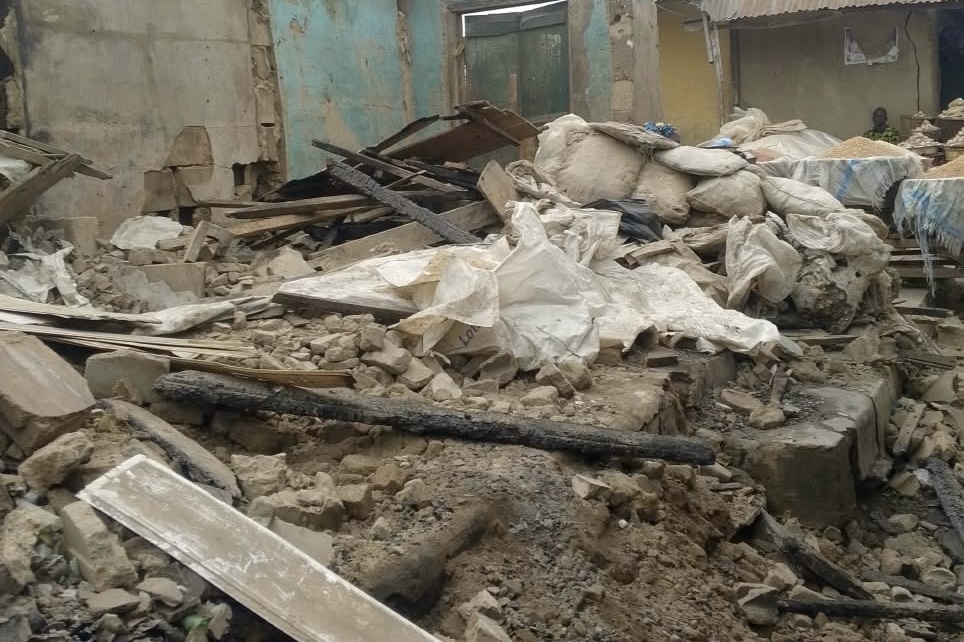
The most recent and deeply worrisome incident occurred just two weeks ago in Esiele, located in Orire Local Government Area of Ogbomoso, Oyo State. In a brazen attack that has sent shockwaves through the entire southwest, bandits struck a school and abducted seven teachers and thirty-nine pupils, including toddlers who had barely learned to walk. Before carting away their victims into the dense forest, the assailants brutally killed one teacher, leaving the community in mourning and terror. As of this writing, the whereabouts of the forty-six abducted individuals remain completely unknown, with no credible information on whether they are alive, where they are being held, or what demands their captors intend to make. The abduction of toddlers alongside teachers marks a dangerous escalation in the ruthlessness of these criminal gangs, shattering the long-held belief that the southwest was immune to the kind of mass kidnapping that had plagued the north for years. Families of the victims wait in agonizing silence, while the entire nation watches and wonders: if bandits can seize nearly fifty people from a school in Ogbomoso and vanish without trace, is anywhere in the southwest truly safe anymore?
The Missing Link: How a Changing Climate Fuels Insecurity
The statistics alone are alarming, but they do not explain why banditry is expanding southward. The missing piece of the puzzle lies in the changing climate. The most striking local evidence comes from the weather anomaly of 2025 into 2026.
In a normal climatic cycle, the dry season reduces vegetation cover. Leaves fall, grasses wither, and the underbrush becomes sparse. This natural process clears forests and reduces hiding places for bandits. Without a proper dry season, the forests surrounding southwest communities remained intact, thick, and green throughout the year. Dense foliage provides excellent cover for criminals to set up camps, move undetected, and launch surprise attacks. The absence of dry winds also means that security surveillance—whether by helicopter patrols or drone flights—is less effective, as the thick canopy obscures ground targets.
The direct consequence of this climatic shift is that bandits from the northwest, fleeing military operations such as Operation Hadarin Daji, discovered that the southwest forests offered permanent concealment—a luxury they no longer had in the drier, more exposed northern terrain. What was once a seasonal hiding opportunity became a year-round fortress.
Beyond vegetation, the changing climate drives insecurity through several other pathways. Prolonged drought in the north forces pastoralists to move their cattle southward, leading to violent clashes with farming communities. As traditional grazing reserves shrink and dry up, young herders with no livelihood alternatives find themselves joining bandit groups. Crop failure and the resulting food inflation create desperation, pushing impoverished youth toward kidnapping for quick ransom. The drying up of major water bodies such as Lake Chad—which shrank by ninety percent between 1960 and 2020—left over thirty million people without fishing and farming livelihoods, creating a vast recruitment pool for Boko Haram and bandit groups. Now, as the northwest becomes increasingly uninhabitable, the southwest’s forests and relatively wetter climate act as a powerful pull factor for armed groups.
The thick forests stretching from Oyo through Ogun to Ondo have become a green highway for criminal mobility. Bandits use these routes to move kidnapped victims to hidden camps, smuggle cattle stolen from the north to southern markets, evade ground patrols by exploiting the absence of roads and tracks, and regroup after attacks on nearby towns. Without the natural clearing effect of a proper dry season, these forests remain impenetrable year-round. This is not a coincidence; it is a direct, observable consequence of the climatic anomaly of 2025–2026.
Why This Is Not Just a Weather Story
Some readers may dismiss the rainfall anomaly as a temporary blip. But climate scientists warn that what we witnessed in 2025 and 2026 is not an outlier—it is a preview of the new normal. Projections from the Nigerian Meteorological Agency and the Intergovernmental Panel on Climate Change indicate that by 2050, annual rainfall in the southwest could increase by ten to twenty-five percent, the length of the dry season could reduce by thirty to fifty percent, and forest regrowth rates will accelerate, providing more cover for criminals. Temperature rises of up to two and a half degrees Celsius will increase heat stress and reduce agricultural productivity.
If these projections hold, the security implications are staggering: the southwest could become a permanent haven for banditry unless proactive measures are taken now.
The Way Out: A Multi-Pronged Strategy
Addressing the intersection of climate change and banditry requires more than military solutions. It demands an integrated approach that tackles root causes.
On strategic forest management, Nigeria needs to move beyond reactive clearance and embrace controlled seasonal bush clearing, encouraging community-led efforts to reduce undergrowth along highways and forest edges during whatever dry periods remain. Forest surveillance technology must be deployed, including solar-powered cameras, seismic sensors, and drone docking stations in dense forest corridors. Community forest guards should be trained and armed, with local hunters integrated as official forest rangers to complement the existing Amotekun corps.
On climate-adaptive security planning, weather-informed patrols are essential. Security agencies must use rainfall and vegetation cover forecasts to predict periods of high concealment risk and surge patrols accordingly. Green infrastructure for security, such as access roads cut through critical forest zones, can break the monopoly that bandits currently enjoy on mobility.
On economic interventions, the goal must be to reduce recruitment into banditry by providing viable alternatives. Youth agricultural revival programmes should offer land, seedlings, and extension services to young people in forest-adjacent communities. Climate-resilient crops that tolerate both drought and flooding can stabilize rural incomes. A serious crackdown on ransom payments, including tracing cryptocurrency ransoms used by sophisticated kidnapping rings, would remove the financial incentive for many abductions.
On regional cooperation, the southwest states must operate a unified intelligence-sharing platform focused on forest-banditry dynamics. Security agencies in the northwest and north-central must share data on bandit groups relocating southward. The Amotekun corps requires better funding, modern equipment including night vision and GPS trackers, and legal authority to operate across state borders within the southwest.
On climate action as a security imperative, Nigeria must reforest with strategic design-planting fast-growing tree species that do not provide thick concealment. Early warning systems should link meteorological forecasts with police deployment schedules. A climate security desk should be established within the Office of the National Security Adviser, dedicated entirely to studying and responding to the climate-insecurity nexus.
Concluding Remarks: Escaping the Climate–Conflict Trap
Nigeria is not accustomed to thinking of weather as a national security variable. We have treated climate change as an environmental or agricultural issue—the concern of farmers, meteorologists, and international donors. The evidence from 2025 and 2026 demands a radical rethink.
When the dry season fails, the forests do not clear. When the forests do not clear, bandits find refuge. When bandits find refuge, communities die, families pay ransoms, and the southwest loses the peace that once distinguished it from the rest of the federation. This is not alarmism. This is observation.
The rains that fell in the fourth month of 2025 and continued unabated into 2026 were not an accident of nature. They were a signal—a warning written in water and wind. The question is not whether we heard it. The question is whether we will act.
We cannot stop the changing climate. But we can stop the bandits from hiding in its shadow.
A Final Call to Action
To the federal government: recognize climate change as a threat multiplier in the National Security Strategy. Fund the Nigerian Meteorological Agency to produce localized, actionable security weather products. To southwest governors: establish a permanent Southwest Climate-Security Council. Conduct a forest-by-forest risk assessment. Reinforce Amotekun with the resources and legal authority it needs. To traditional rulers: mobilize your communities to report unusual movements in forest areas. Reinvigorate the local vigilante systems that protected our ancestors. To citizens: demand that your representatives treat the missing dry season of 2025 and 2026 not as a conversation piece for social gatherings, but as a crisis precursor requiring urgent legislative and executive action. The forest has become a fortress. It is time to take it back.
Dr. R. B. Ibrahim (08104294271) is an Urban Infrastructure Development Planner, Climate Change Impact Analytics expert, writes on How a Changing Climate Fuels Insecurity in Southwest Nigeria. He is a sabbatical appointee in the Department of Urban and Regional Planning, Faculty of Environmental Sciences, LAUTECH, Ogbomoso.