
INEC: Amupitan frowns at conflicting court orders
The new leadership of the Independent National Electoral Commission (INEC) has warned that it would no longer sit by and watch the reign of impunity persist within political parties.
Also, it said the Commission would strengthen its monitoring abilities to ensure that those parties were well monitored and regulated.
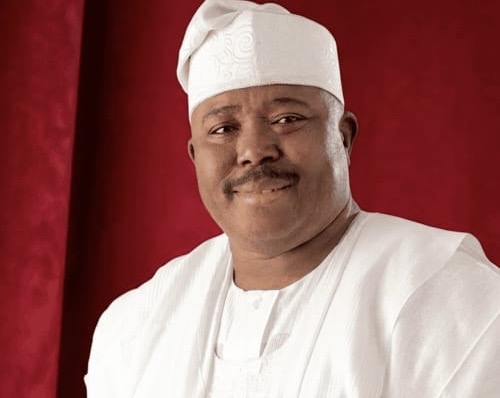
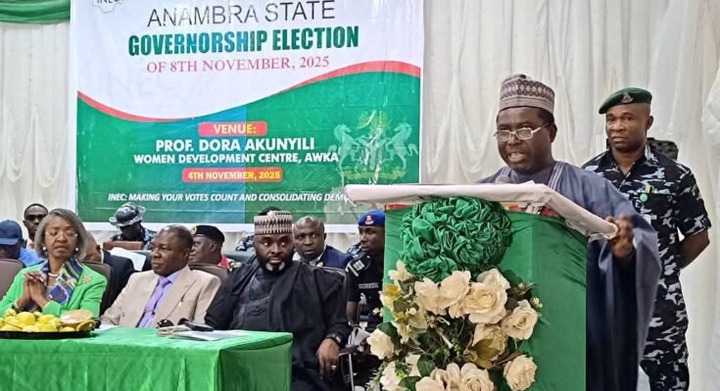
INEC Chairman Prof Joash Ojo Amupitan made the position known in Awka, ahead of the just concluded Anambra state governorship election won by the incumbent governor, Professor Charles Chukwuma Soludo.
Apart from him being disturbed as an individual by the lack of internal democracy and power tussle within the parties, he said the Commission, as a body reposed with the responsibility to nurture democracy in the country, was greatly worried.
He, therefore, stated that henceforth, there would be consequences for all those shenanigans by the political parties, adding that the Election Management Body (EMB) would soon do something about the menace in political parties.
According to Amupitan, INEC was concerned by barrage of litigations that usually follows nomination of candidates as well as leadership tussle within parties, resulting in conflicting orders by courts of coordinate jurisdiction.
He stated that when the parties joined INEC in their lawsuits, the time of the electoral body was wasted and the commission engaged lawyers who must be paid, maintaining that such payments do not come cheap.
He also noted that 75 per cent of litigations in the parties were in respect of pre-election matters, mostly dealing with parties and leadership and also primaries that were conducted contrary to the provisions of the constitution of the party.
Amupitan said: “The lack of internal democracy in political parties bothers me as a person. It bothers us as a body. You know why it bothers us? Because of the revenue or money and time wasted. Every party going to court, they must join INEC. When they join INEC, INEC must engage lawyers, you pay for it and it’s not cheap.
“I was informed that 75 per cent of litigations are in respect of pre- election matters, mostly dealing with parties’ tussles and leadership and also primaries that were conducted contrary to the provisions of the constitution of the party.
“So the mistakes that we have been making is that we look at Saturday, for instance, when there will be an election, all the actors will come out but we don’t even look at the recruitment process that starts from the parties.
“The emphasis is not much on what is happening within the party and INEC has the constitutional and statutory responsibility to monitor the parties. In fact, the power is enormous but the attempt to even diminish that power of monitoring the political parties so that they can be on their own is to a very dangerous dimension.
“So we are strengthening our monitoring capabilities of INEC to ensure that those political parties are well monitored, regulated. But that does not mean it’s not being done.”
…Conflicting court orders
Continuing, the INEC boss said: “However, we have also seen some loopholes within the law such that like all these leadership problems in one party today. In fact, as we are speaking, the National Commissioner in charge of party monitoring was telling me to look at another Federal High Court Abuja said PDP should not hold convention, another one from Ibadan said it must hold convention and you recall June 12 was one of the major problems of this country, and then somebody took over and they said why did you take over.
“So there’s confusion. Justification. INEC as an independent body that is meant to nurture Nigeria’s democracy, we will not allow such things to happen.
“So there will be consequences for all those shenanigans by the political parties. We are doing something about it, very soon you see some of these things. We are concerned.”
…Election tribunals
On the creation of Special Election Tribunals that will handle election matters, the INEC chairman said: “At the moment, we cannot create any special courts because it’s a constitutional matter and before you can create any special courts for election, it means that you have to amend the Constitution.
“I’m aware that the constitutional amendment process is ongoing right now but it’s a very tedious thing to amend the Constitution of Nigeria, not just amending the Electoral Act.
“So I’m not going to promise you that there are going to be any special courts because we have to comply with the provisions of the Constitution relating to amendment.”
“And let me also say that the election tribunals established under the Constitution are also special courts because they are specifically set up for the purpose of the election and after the election proceedings up to the court of Appeal, they seize to be Election Petition Tribunals, even though they are manned by regular judges.
“For instance, when the Court of Appeal is exercising its powers as the Presidential Election Tribunal, it’s not the court of Appeal any more, it’s a special court. Had it been sitting in Abuja, a special panel was created for that purpose.
“So we already have specialised courts for the purposes of handling election petitions. But if it has to do with, maybe, the time it takes to conclude election matters and that is what is going on in the amendment process to see how the time can be reduced and maybe, some of the technical cases can also be addressed,” Amupitan further stated.