











FG Earmarks ₦962.83bn for SUVs, Empowerment Projects in 2026 Budget Despite Debt Concerns
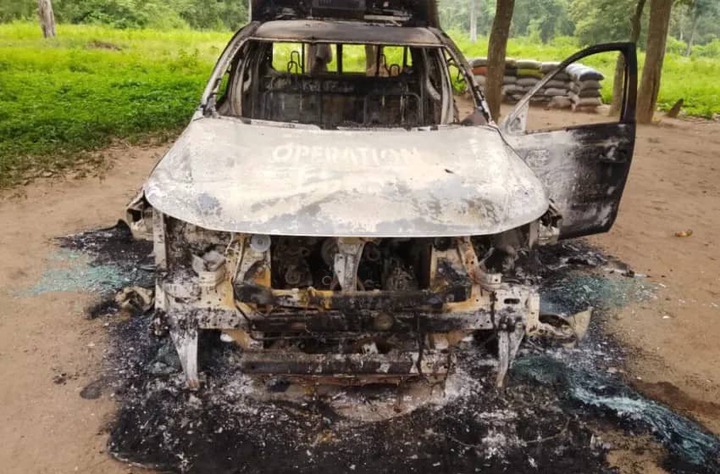
The Federal Government has earmarked ₦962.83 billion for the procurement of Sport Utility Vehicles, SUVs, and empowerment projects in the 2026 Appropriation Act, despite mounting concerns over Nigeria’s rising debt burden and increased borrowing plans.
An analysis of the budget by civic technology organisation, Tracka, shows the allocation comprises ₦15.13 billion for 39 SUVs and ₦947.70 billion for 2,579 empowerment projects nationwide.
The amount exceeds the combined ₦960.27 billion allocation to seven major federal ministries.
According to Tracka, the Federal Ministry of Livestock Development received ₦177.6 billion, Women Affairs ₦169.39 billion, Industry, Trade and Investment ₦156.8 billion, Justice ₦150.7 billion, Housing and Urban Development ₦145.3 billion, Aviation and Aerospace Development ₦87.3 billion, and Petroleum Resources ₦73.1 billion.
Tracka expressed concern over inadequate transparency in the implementation of the empowerment projects, noting that only 70 of the 2,579 projects have clearly identified locations.
“How can citizens track projects with no stated location? How can oversight institutions verify implementation? How can taxpayers know who ultimately benefits from these allocations?” the organisation queried.
Tracka said the projects are spread across 184 implementing agencies, including institutions not ordinarily mandated to execute such programmes.
The Federal Cooperative College, Oji River, was assigned 393 projects valued at ₦127.1 billion. The Federal College of Horticulture, Dadin-Kowa, Gombe, got 216 projects worth ₦88.1 billion. The Federal Cooperative College, Ibadan, received 94 projects worth ₦36.9 billion. The National Agricultural Development Fund was allocated six projects valued at ₦89.5 billion.
The single largest empowerment allocation is ₦89.09 billion for the Renewed Hope Fertiliser Support Programme under the National Agricultural Development Fund.
Other major allocations include ₦14 billion for procurement and distribution of empowerment equipment and utility vehicles through the Federal Cooperative College, Oji River; ₦14 billion for youth empowerment under the Federal Ministry of Youth Development; and ₦14 billion for youth empowerment and medical outreach under the Federal Ministry of Humanitarian Affairs and Poverty Alleviation.
The budget also provides for buses, tricycles, motorcycles, electric vehicles, sewing machines, fertilisers, vocational equipment, grants, and other items to be distributed through various agencies.
While acknowledging that empowerment programmes can improve livelihoods, Tracka warned that poorly designed interventions often become tools for political patronage.
“There is nothing inherently wrong with empowerment programmes. When well-designed and transparently implemented, they can improve livelihoods and create economic opportunities,” the organisation stated.
“However, when projects have no clear location, no transparent beneficiary selection process, and are assigned to agencies without the appropriate mandate, public confidence is eroded and accountability becomes difficult.”
Tracka linked its concerns to the government’s fiscal position, noting that the 2026 budget is projected to run a deficit of about 46 per cent and will rely heavily on borrowing.
“This concern is even more pressing given that the 2026 Budget is projected to be financed with a deficit of about 46 per cent. At a time when government is borrowing heavily, every naira should be directed toward investments with clear development outcomes and value for money, not opaque allocations that citizens cannot track,” it said.
The government recently increased its 2026 borrowing plan to ₦29.20 trillion from ₦17.89 trillion, after expanding the proposed budget to ₦68.32 trillion against projected revenue of ₦36.87 trillion, resulting in a fiscal deficit of ₦31.46 trillion.
Professor of Economics at Olabisi Onabanjo University, Sheriffdeen Tella, urged the government to ensure empowerment programmes support local production.
“Any empowerment should be based on what we produce here. Spending empowerment money to import things simply means the money is not being used here, and it cannot have much positive impact on our economy,” he said.
Lagos-based economist, Adewale Abimbola, described the allocation as evidence of poor fiscal prioritisation.
“It shows a lack of prioritisation on the part of the Federal Government. It paints the Federal Government as a poor manager of financial resources,” Abimbola said.
He added that empowerment programmes should be carefully designed to reach genuinely vulnerable Nigerians instead of becoming channels for waste and political patronage.
Tracka called on the government to improve transparency by ensuring every project has a clearly defined purpose, location, implementing agency, identifiable beneficiaries, and measurable outcomes.