










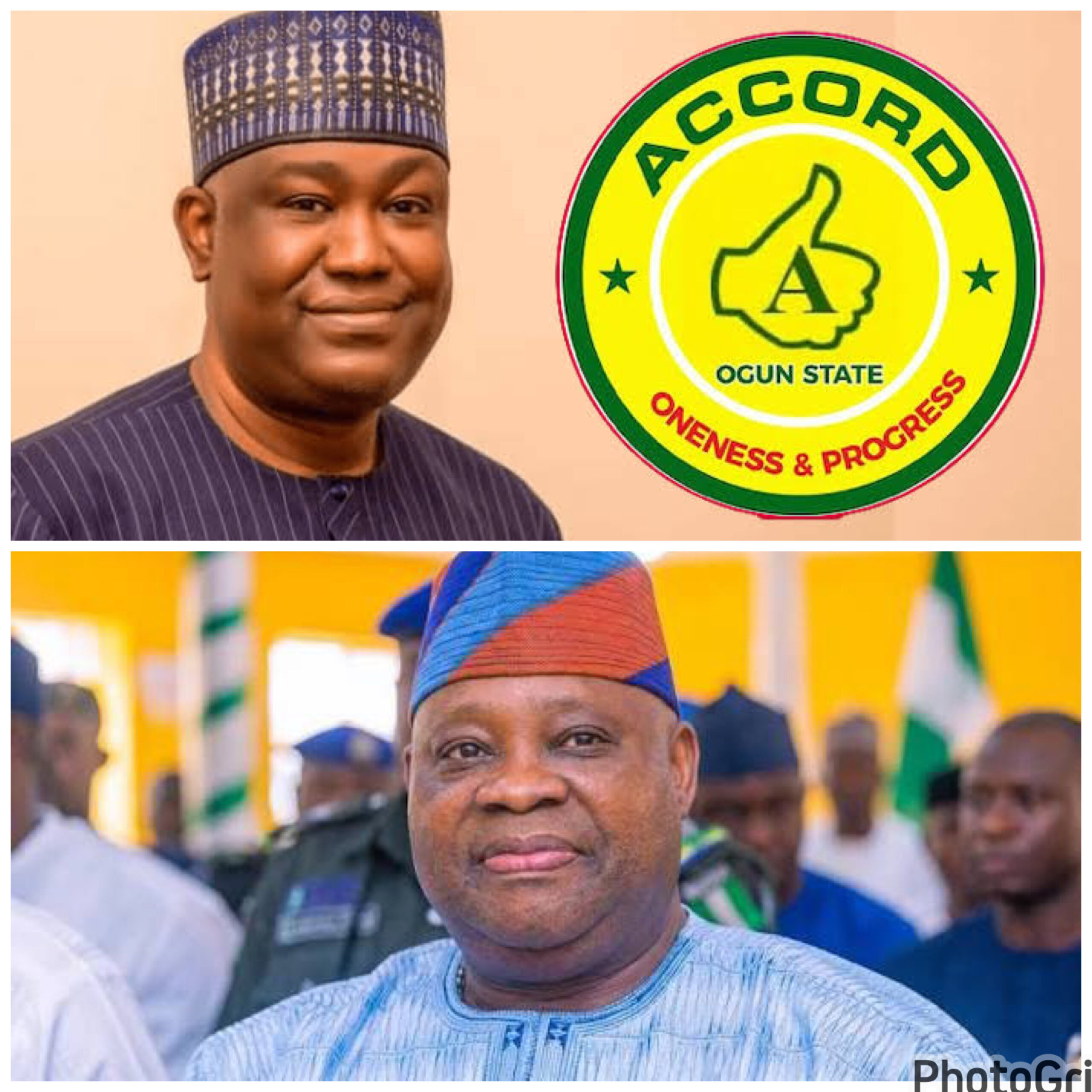
Accord Crisis: Party Leaders Threaten to Back APC’s Oyebamiji if Adeleke Snubs Hashim
The political crisis in the Osun State chapter of the Accord Party has deepened, with party executives warning Governor Ademola Adeleke to align with the party’s national presidential candidate, Dr. Gbenga Olawepo-Hashim, or risk losing their support ahead of the 2026 governorship election.
In a statement issued in Osogbo, the executives accused the governor of benefiting from the Accord platform while failing to identify with the party’s national political direction.
They said Governor Adeleke must choose between supporting the presidential ambition of Olawepo-Hashim or face a possible political realignment that could see the party back the All Progressives Congress, APC, governorship candidate in Osun, Bola Oyebamiji.
The statement was jointly signed by the Accord Party’s Osun State Public Relations Officer, Daniel Adedayo, and State Youth Leader, Tolulope Babalola.
The executives argued that the governor cannot operate on the Accord platform while supporting political interests outside the party’s national structure.
“If the governor believes President Bola Tinubu deserves another term in 2027, then Bola Oyebamiji should equally be considered fit to govern Osun State,” they stated.
They maintained that Adeleke’s position as the leading political figure of Accord in Osun does not give him the authority to determine the party’s national direction. They stressed that every member and stakeholder has a responsibility to respect the party’s decisions.
“Governor Adeleke remains only one voice among many in the party nationwide and cannot dictate for the party,” the executives warned.
They urged the governor to demonstrate commitment to Accord by supporting Hashim’s presidential project and strengthening the party’s national relevance ahead of the 2027 general election.
*Wider Implications for Osun Politics*
The development adds another layer of complexity to Osun’s political contest as Governor Adeleke seeks a second term amid questions over party cohesion, legal challenges surrounding Accord’s participation, and competing national alignments.
The disagreement also reflects the broader struggle within emerging political parties to balance state-level electoral interests with national ambitions ahead of 2027.