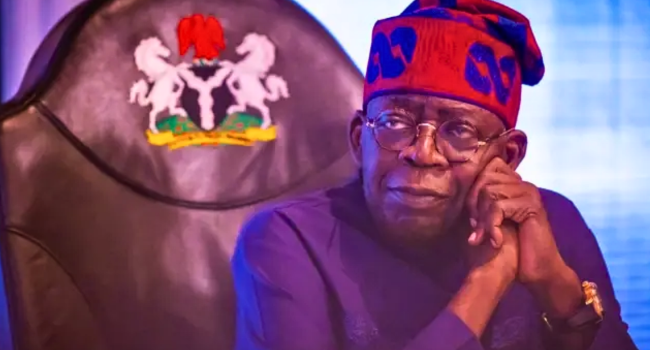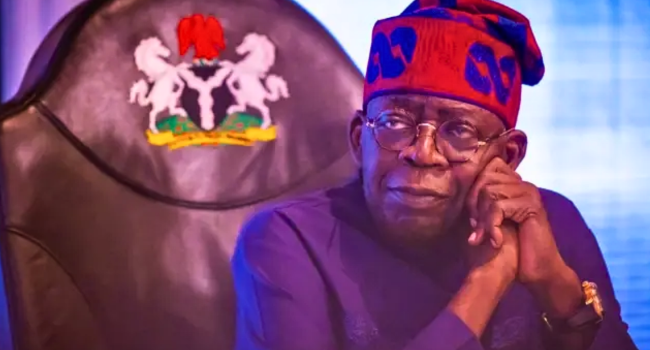
President Bola Tinubu has expanded his personal campaign itinerary for the 2027 presidential election, increasing the number of states he plans to visit from 12 to 19, in addition to the Federal Capital Territory (FCT).
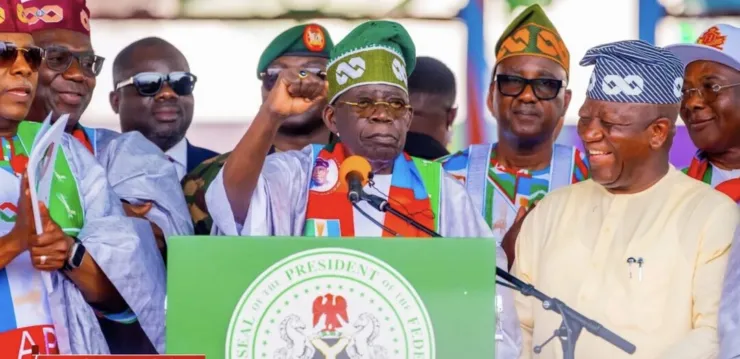
The revised schedule indicates that the President is now expected to attend 20 campaign rallies across the country between October 24, 2026, and January 13, 2027.
The updated itinerary adds Katsina, Taraba, Zamfara, Imo and Kwara to the original list, while Akwa Ibom, Jigawa and Kebbi have also been incorporated following Tinubu’s recent campaign appearances in the states.
The development marks a departure from the initial arrangement under which other APC leaders were expected to represent the President at some state rallies.
Tinubu has already attended campaign events in several locations outside his original itinerary, including Uyo, Akwa Ibom State, on November 6, where he also inaugurated projects executed by Governor Umo Eno’s administration.
He subsequently attended a rally in Port Harcourt, Rivers State, on November 7, followed by engagements in Dutse, Jigawa State, on November 10, and Birnin Kebbi, Kebbi State, on November 17.
Under the revised schedule, Tinubu is expected to visit Katsina on December 2, Kano on December 17, Jalingo, Taraba State, on December 19, and Abuja on December 21.
Other scheduled appearances include Gusau, Zamfara State, on December 28, and Owerri, Imo State, on December 30.
The President is expected to resume campaign activities in the New Year with rallies in Yola, Adamawa State, on January 4; Sokoto on January 5; and Ilorin, Kwara State, on January 8.
He will then visit Asaba, Delta State, on January 11, before rounding off the campaign with a major rally in Lagos on January 13.
The revised timetable also contains changes to the original schedule. The Sokoto rally has been moved from December 5 to January 5, while the Lagos finale has been shifted from January 9 to January 13.
The Bauchi rally, initially scheduled for November 29 with Tinubu expected to attend, has been moved to December 1. However, the revised programme does not indicate that the President will personally attend the event.
Although the APC has scheduled 37 rallies across the 36 states and the FCT, Tinubu is expected to personally participate in 20, leaving other party leaders to lead the remaining engagements.
A breakdown of the revised itinerary shows that the North-West has the highest number of states on the President’s campaign trail, with seven: Kaduna, Jigawa, Kebbi, Katsina, Kano, Zamfara and Sokoto.
The North-East and South-South have three states each, while the North-Central, South-West and South-East have two states each.
The distribution places the North-West at the centre of Tinubu’s planned campaign appearances, although the revised schedule includes engagements across the other geopolitical zones.
The President had earlier told members of the APC Presidential Campaign Council in Abuja that he would not be able to attend every rally because of the need to balance campaign activities with his responsibilities as head of government.
He, however, promised to make time to engage directly with Nigerians while other party leaders took the campaign to different states and local government areas.
According to Daily Trust, the expanded itinerary comes amid controversy over Tinubu’s initial decision to limit his personal campaign appearances to 12 states, leaving other APC leaders to represent him at rallies elsewhere.
At the inauguration of the APC Presidential Campaign Council on October 14, Tinubu had explained that he would not attend every campaign event, citing the demands of governance, the country’s financial obligations and the need to attract long-term investors.
“So, you will excuse me from going everywhere with you; we have bills to pay. The American creditors cannot wait,” he told members of the campaign council.
The decision triggered criticism from opposition figures and political groups, who questioned why a sitting President seeking re-election would not personally take his campaign to all parts of the country.
Among those who criticised the arrangement were the Social Democratic Party (SDP) presidential candidate, Adewole Adebayo, Peter Obi Media Reach and the Makinde/Daura Presidential Campaign Organisation.
They argued that party representatives could not replace the President in addressing Nigerians’ questions about his administration’s performance.
Adebayo alleged that Tinubu’s decision was an attempt to avoid confronting voters over economic hardship and what he described as unmet expectations.
The Makinde/Daura group also challenged the President to campaign across the country or withdraw from the presidential race.
Similarly, Peter Obi Media Reach argued that Nigerians were being asked to assess Tinubu’s policies, promises and performance, rather than those of party representatives campaigning on his behalf.
The APC, however, defended the President’s decision, maintaining that there was no legal requirement for a presidential candidate to visit all 36 states during an election campaign.