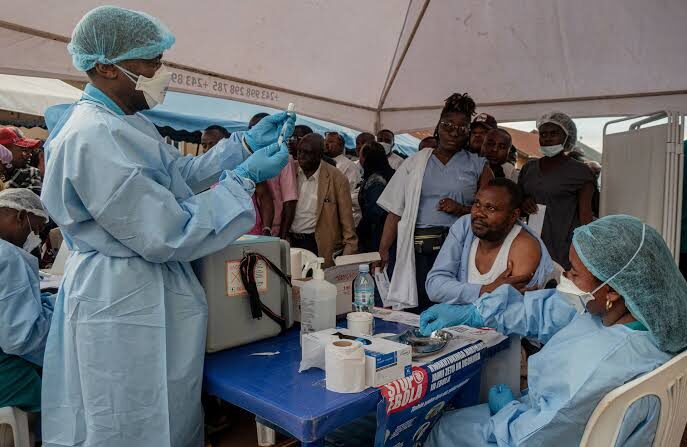
The Senate has passed for second reading a bill seeking to amend the National Health Act, 2014, to establish mandatory emergency medical treatment standards and referral protocols for public and private healthcare facilities across Nigeria.
Similarly, a bill seeking to amend the National Health Act, 2014, to empower authorities to suspend or withdraw the operating licences of healthcare facilities that refuse or obstruct emergency medical treatment passed second reading in the House of Representatives.
The proposed legislation in the Red Chamber, sponsored by Abdulaziz Yar’Adua, senator representing Katsina Central, seeks to prescribe specific timelines for the assessment, treatment, stabilisation and referral of patients requiring emergency medical attention.
The bill, which scaled second reading during Wednesday’s plenary, proposes a fine of up to N300,000 or imprisonment for a term not exceeding six months, or both, for healthcare providers and facilities that violate its provisions.
It also seeks to prohibit hospitals, healthcare workers, and other providers from refusing emergency medical treatment to anyone, regardless of the circumstances.
“A health care provider, health worker, or health establishment shall not refuse any person emergency medical treatment for any reason whatsoever,” the proposed amendment states.
“All healthcare workers involved in the provision of emergency medical care shall be required to undergo training and obtain certification in emergency care competencies as a condition for participating in the delivery of emergency medical services.
“The Medical and Dental Council of Nigeria and the Nursing and Midwifery Council of Nigeria shall jointly develop and maintain a standardized national emergency care curriculum, and all healthcare workers involved in the provision of emergency medical care shall be required to undergo such training and certification at intervals not exceeding eighteen (18) months.”
Leading the debate on the bill, Yar’Adua said the legislation would establish clear obligations for healthcare facilities and personnel attending to patients in critical conditions.
Under the proposed amendment, all public and private healthcare facilities licensed to provide emergency medical services would be required to commence triage and initial assessment within 15 minutes of a patient’s arrival at the emergency department.
Where a licensed medical doctor is unavailable, a trained and certified nurse may conduct the initial assessment.
The bill also requires healthcare facilities to initiate basic stabilisation measures, including oxygen therapy, intravenous fluids, pain relief and preliminary diagnostic procedures, within 30 minutes of a patient’s arrival.
It further provides that life-saving interventions, including cardiopulmonary resuscitation, airway management and bleeding control, must commence immediately after a life-threatening condition is identified.
On hospital admission, the proposed amendment stipulates that where a licensed medical officer determines that a patient requires admission, a hospital bed should be assigned within two hours of arrival, provided bed space is available.
Where a facility has no available bed space, it would be required to commence basic resuscitation and stabilisation immediately while initiating arrangements to transfer the patient to another healthcare facility.
The referral process must commence within two hours of arrival or as soon as the patient has been clinically assessed and deemed stable for transfer, whichever comes first.
The bill further proposes that the transfer process be completed within three hours of the patient’s arrival, except where external circumstances, including transportation difficulties, insecurity or natural conditions, make compliance impossible.
To reduce delays during referrals, healthcare facilities would also be required to commence ambulance dispatch or secure alternative transportation within 30 minutes of communicating the decision to refer a patient.
The proposed amendment provides protection for healthcare practitioners who are unable to meet the prescribed requirements because of resource constraints, provided they document the circumstances, comply with the referral protocols and report the incident to hospital management or the appropriate authority.
The bill was referred to the relevant Senate committee for further legislative work and is expected to be considered within four weeks.
Nigeria’s existing legal framework already prohibits hospitals and healthcare workers from refusing emergency medical treatment.
Section 20 of the National Health Act, 2014, provides that a healthcare provider, health worker or health establishment shall not refuse a person emergency medical treatment for any reason. The law prescribes a fine of N100,000 or imprisonment for up to six months, or both, for offenders.
The proposed amendment seeks to strengthen the existing provision by introducing specific timelines for emergency assessment, stabilisation, admission and referral, increasing the maximum fine to N300,000 and requiring periodic emergency-care training and certification for healthcare workers.
Doctors Reject Six-Month Jail Term, Fine For Delayed Emergency Care
Meanwhile, the Nigerian Association of Resident Doctors has rejected a proposed amendment to the National Health Act seeking to impose a six-month jail term or a fine of up to N300,000 on healthcare professionals and facilities over delays in emergency medical treatment.
The association described the bill, which has reportedly passed second reading in the Senate, as punitive and as criminalising doctors for the failures of a healthcare system that successive governments have failed to fund, equip and staff.
In a statement signed by its President, Dr Ogar Idoko, Secretary General, Dr Besongngem Akotanchi, and Publicity and Social Secretary, Dr Ashimom Timothy, made available to journalists on Friday in Calabar, the doctors said while it recognised the importance of prompt emergency care, it would not accept legislation that punished doctors without addressing systemic failures.
The statement read, “The attention of the leadership of NARD has been drawn to reports of a proposed amendment to the National Health Act seeking to impose a six-month jail term or a fine of up to N300,000.00 on healthcare professionals and facilities over delays in emergency medical treatment. The proposed legislation, which has reportedly passed second reading in the Senate, seeks to introduce mandatory timelines for emergency care treatment and referral.
“While NARD recognises the importance of prompt emergency care and the need to protect patients from avoidable harm, we unequivocally reject any legislative approach that criminalises healthcare professionals without adequately addressing the systemic failures that undermine emergency medical services in Nigeria.”
NARD said doctors across Nigeria work under extremely difficult conditions, struggling to save lives in hospitals plagued by obsolete equipment, inadequate staffing, unreliable electricity, insufficient emergency supplies and deteriorating infrastructure.
“It is unacceptable to punish doctors for the consequences of a healthcare system that successive governments have failed to adequately fund, equip and staff,” part of the statement read.
It said the challenges were not products of professional negligence but consequences of longstanding institutional neglect.
The association said it was deeply concerning that lawmakers would prioritise punitive legislation against frontline healthcare workers while the country continues to fall short of the 15 per cent health budget allocation commitment under the Abuja Declaration.
“We challenge the National Assembly to demonstrate the same legislative urgency in ensuring adequate healthcare funding, functional emergency departments, modern diagnostic equipment, uninterrupted electricity, reliable ambulance services and sufficient healthcare personnel,” NARD said.
“You cannot legislate oxygen into an empty cylinder, electricity into a dark operating theatre, or life-saving equipment into an inadequately funded hospital,” it added.
NARD called on lawmakers to subject themselves to the same standards of accountability they seek to impose on healthcare professionals.
It said if legislators believe imprisonment is the appropriate response to failures in the healthcare system, they should first consider legislation compelling public officeholders to seek medical treatment in Nigerian government hospitals, with appropriate sanctions for misuse of public resources on avoidable overseas medical tourism.
NARD warned that introducing additional criminal penalties against already overstretched healthcare professionals could accelerate the ongoing brain drain, popularly known as the japa syndrome.
The doctors said that at a time Nigeria is struggling to retain its skilled medical workforce, creating an increasingly hostile and punitive working environment risks driving more doctors and nurses out of the country.
The association acknowledged that the reported bill contains provisions recognising resource limitations and documented circumstances beyond the control of healthcare practitioners.
It, however, insisted that such safeguards must be explicit, comprehensive and enforceable, ensuring doctors are never criminally punished for institutional failures, unavailable equipment, inadequate staffing or circumstances beyond their reasonable control.