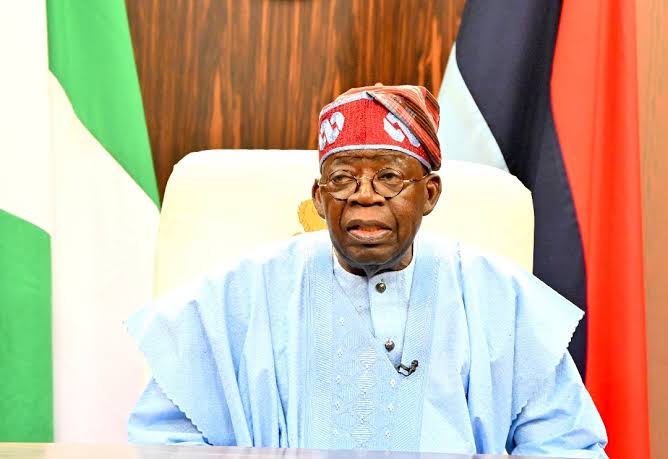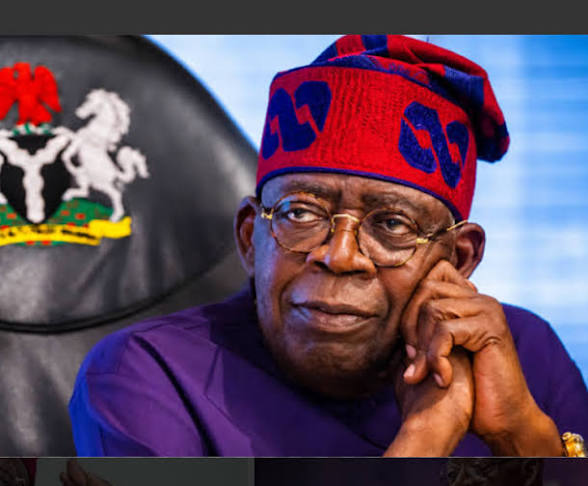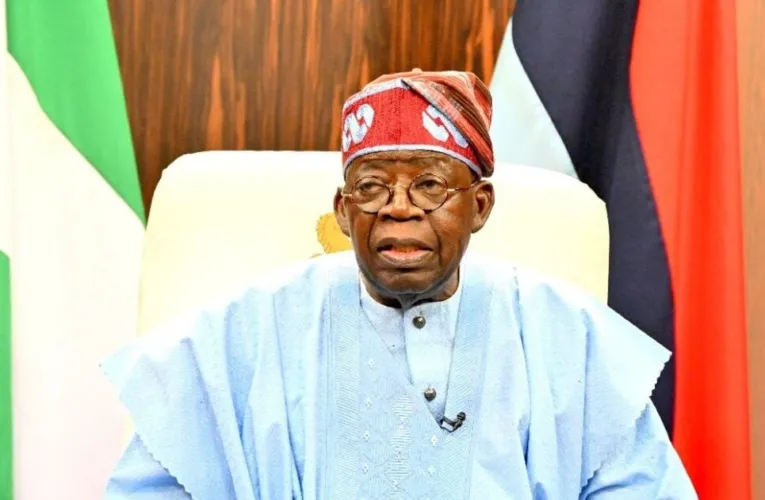
President Bola Ahmed Tinubu has declared that bringing down the cost of living remains the priority of his administration, saying it will be achieved by reducing the cost of producing and moving goods and services across the country.
Tinubu made the declaration in his Independence Day address to Nigerians to mark the country’s 65th anniversary. [Note: Nigeria marked 65th, not 66th, on Oct 1, 2026].
The President said Nigeria had endured decades of war, military rule, economic crises, insecurity and political upheaval but remained resilient because of the determination of its people.
He recalled that 65 years after the national flag was first raised over a free and sovereign nation, the country remained bound by the promise of building a united, strong and prosperous nation.
Tinubu paid tribute to farmers, traders, teachers, young entrepreneurs and members of the Armed Forces and security services who, he said, had sustained the country and risked their lives to protect it.
According to him, the founding fathers did not struggle merely for a flag, an anthem or a place among nations, but for the freedom to shape the country’s destiny and build a nation capable of providing opportunity, dignity and a better life.
“Sixty-five years later, Almighty God has made it our responsibility to deliver that promise,” he said.
President Defends Reforms
Tinubu said the anniversary was an opportunity to speak honestly about Nigeria’s journey and the choices made.
He said the promise of Nigeria had for too long been undermined by decisions that postponed difficult choices and allowed economic distortions to deepen.
The President said Nigeria had reached a turning point after three years of difficult economic reforms, declaring that the country had moved from correcting distortions to a new phase centred on shared prosperity.
“The age of reform has done its work. Now begins the age of prosperity,” he said.
He argued that the reforms did not create Nigeria’s economic problems but addressed distortions that had deepened over time.
He likened the economy to a patient diagnosed with cancer, saying difficult treatment was necessary to address the underlying disease rather than suppress its symptoms.
“For too long, Nigeria’s leaders chose morphine while praying for a miracle that never came,” he said.
According to him, his administration chose to “excise the cancer” despite the painful consequences.
“We must resist calls to abandon the treatment and return to the abuse of addictive subsidies,” he said.
Tinubu Cites Gains
Tinubu cited economic growth of more than four per cent in 2026, contributions from oil and non-oil sectors, reduced oil theft, a substantial decline in inflation from its peak, rebuilt foreign reserves and greater stability in the foreign exchange market.
He also said Nigeria recorded its highest-ever non-oil export revenue in 2025, exceeding $6 billion.
“These are not idle claims. International observers, journalists, NGOs and multilateral institutions can see the change,” he said, adding that foreign direct investment was rising.
Production, Transport Costs Must Fall
Tinubu said prosperity meant a Nigeria where farmers cultivate safely, produce more cheaply and earn decent returns; where factories have reliable power; businesses can access credit; young people find productive work; and food, transport and education become more affordable.
He said government would focus on mechanised irrigation and dry-season farming, improved access to seeds and fertiliser, greater mechanisation, and investment in storage and transportation.
Roads, railways and ports are being built and completed to connect farms and factories to markets, he said, noting that reducing production and transport costs would help lower prices.
“Our logic is simple. When a farmer produces more cheaply, when fewer crops are lost between farm and market, when a manufacturer spends less on electricity, when a truck reaches its destination faster, and when the business environment fosters fair competition, all those savings will ultimately find their way into the price of goods,” he said.
Jobs, Industry Central
The President said productive employment was central to prosperity, describing Nigeria’s young population as an opportunity if properly harnessed.
“We are therefore placing jobs, enterprise, and industrial growth at the heart of our government’s policies,” he said.
He said government would use gas resources to power industries, support revival of factories, expand digital connectivity, invest in employer-demanded skills and provide businesses with infrastructure and finance.
“I want to see more Nigerians making things… Young Nigerians building unicorns and creating opportunities for others here at home,” he said.
‘We Cannot Erase Poverty in Four Years’
Tinubu acknowledged that millions still struggle with food, school fees, medical bills and transportation, saying their difficulties predated the reforms.
“We cannot erase in four years what accumulated over generations. But we can change its course,” he said.
He said government was strengthening direct support for poorest households and improving the National Social Register, highlighting the Nigerian Education Loan Fund (NELFUND) and CREDICORP consumer credit scheme.
He added that his administration would continue working with state and local governments to strengthen primary healthcare, basic education and other essential services.