











Let The Record Speak, But Do Not Edit The Record || By Dr. Peter Akande
I have read the article titled “There Is No Masquerade, Let the Record Speak,” and I find it necessary to respond, not because every political disagreement deserves a response, but because when someone invokes “the record,” the entire record must be placed before the public. The people of Ibadanland deserve nothing less than honesty, consistency and transparency.
If, as the writer claims, there is genuinely no preferred candidate, then a simple question deserves an equally simple answer: why is there such an elaborate attempt to convince the people of Ibadanland that there is no preferred candidate? Genuine neutrality does not require endless explanations. It is demonstrated by conduct, consistency and fairness.
Ibadan people are politically sophisticated. They have watched political developments over the years. They understand alliances, friendships, political movements and the interests behind public statements. They do not need anybody to tell them what they should see or how they should interpret political events.
What is even more troubling is the selective manner in which the issue of hardship is being presented. If the writer is genuinely concerned about the suffering of ordinary Nigerians, then several questions must be asked. Where was this voice when Oyo State pensioners were going through difficult times? Where was the concern when pensioners were waiting for their entitlements? Where was the voice when workers and families were struggling with the rising cost of living? Where was the concern when young people were desperately looking for employment opportunities? Where was this voice when there were concerns about inadequate employment and the general economic difficulties confronting ordinary citizens?
It is very easy to discover hardship when the objective is to attack a political opponent. But genuine concern for the people should not begin only when political calculations become important. If one truly cares about the people, the concern must be consistent, whether an election is approaching or not.
Nobody should pretend that Nigerians are not suffering. The economic hardship in the country is real, and families across Nigeria are experiencing serious pressure. The cost of food, transportation, education, healthcare and other necessities has placed enormous burdens on ordinary Nigerians. But if we acknowledge that the problem is national, then we must also be intellectually honest about the level of government responsible for national economic policies.
This is where the argument becomes interesting. If the writer genuinely believes that Nigerians are suffering because of bad economic policies, does he also have the courage to tell his preferred political candidate at the federal level the truth? Will he tell his political allies when their policies are hurting the people? Will he speak with the same courage when the policies of the Federal Government are being discussed?
That is what true elderhood requires. An elder should not be courageous only when criticising people on the other side of the political divide. An elder should be able to speak truth to everyone, including friends, associates and political allies.
The Federal Government controls many of the major economic levers that directly affect the Nigerian people, including monetary and fiscal policies, taxation, exchange-rate policy and other national economic decisions. Therefore, it is intellectually dishonest to attribute every economic difficulty experienced by Nigerians to a state governor. National economic hardship requires a national conversation, and those responsible for national policy must be held accountable.
This is why the writer should also tell his preferred candidate to adjust where necessary. Nigeria is bigger than any individual, political party or political ambition. The people are the ultimate beneficiaries of government, and their welfare must come before political calculations.
At the same time, let us examine Oyo State fairly. Nobody is saying that Governor Seyi Makinde is perfect. No governor is perfect, and there is always room for improvement. However, criticism must be based on facts and comparison, not selective information designed to create a predetermined impression.
The administration of Governor Makinde can point to several areas of intervention. The state government has reported regular payment of workers’ salaries, implementation of an ₦80,000 minimum wage and continued payment of pensions and gratuities. The government has also reported interventions concerning pensioners and inherited gratuity obligations. These are issues that should be acknowledged when assessing the performance of any administration.
There have also been significant investments in infrastructure, healthcare, education and security. The administration has pursued road construction and rehabilitation, improvements in healthcare facilities, support for primary healthcare, interventions in education and assistance to security agencies. Whether one supports Governor Makinde politically or not, these issues deserve objective assessment.
The proper question therefore is not whether Governor Makinde has done everything perfectly. He has not. The proper question is whether his administration has done anything meaningful and whether those achievements compare favourably with what has been achieved elsewhere.
If the answer is no, then present the evidence.
If you believe another candidate is better, present that candidate’s programme.
If you believe Governor Makinde has failed, identify the areas of failure and provide the evidence.
That is how serious political discourse should be conducted.
What should not be acceptable is the use of questionable statistics to manipulate public opinion. I have seen the claim being circulated that Nigeria was ranked “56th out of 60” among the poorest countries. Nigeria unquestionably has a serious poverty problem, but statistics of this nature must be properly sourced. Who conducted the ranking? What year was it published? What methodology was used? What exactly was being measured?
Statistics are not political decorations. If a statistic is being used to condemn an individual or government, it must be subjected to scrutiny. Otherwise, it becomes propaganda rather than evidence.
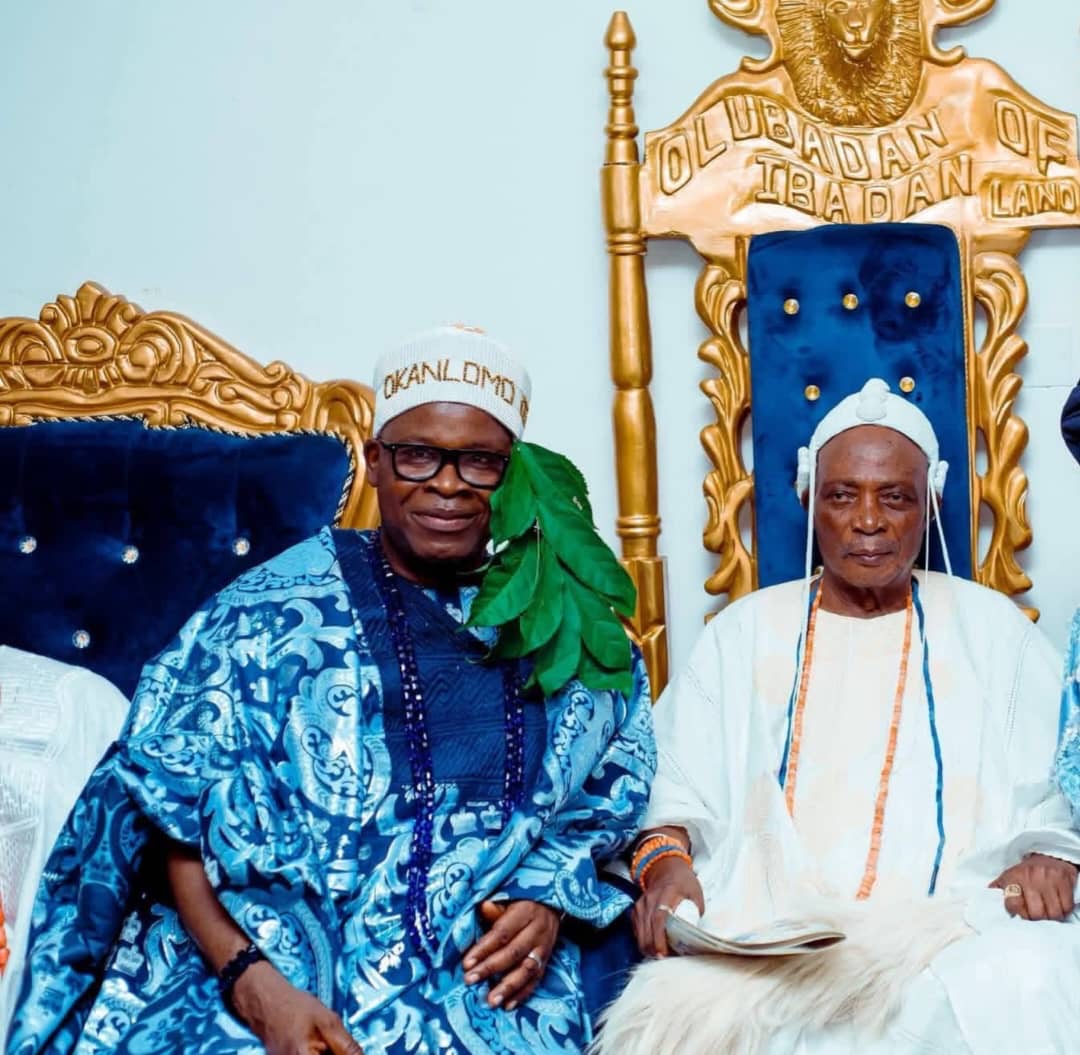
There is also the question of traditional titles and the responsibilities that come with them. What qualifies a person to receive a traditional title? Is it simply wealth, influence, political connections or social standing? Or should such a title also demand wisdom, maturity, restraint, fairness and the ability to rise above partisan politics?
A traditional title should be more than an ornament. It carries responsibility. An elder is expected to unite people, calm tensions and provide wise counsel. An elder should be able to criticise his own political camp when necessary. An elder should be able to tell his preferred candidate the truth when that candidate is wrong.
That is why the public has every right to question statements that appear politically partisan while being presented as neutral interventions.
There is also a political history that cannot simply be erased. I remember that the man in question had gubernatorial ambitions in the past. There is absolutely nothing wrong with aspiring to become governor. It is a legitimate democratic ambition. However, when someone who has previously expressed political aspirations becomes heavily involved in contemporary political arguments, the public is naturally entitled to examine whether those past experiences have any influence on present positions.
This is not an accusation. It is simply a legitimate question that comes with public life.
If one once desired a political platform and did not obtain it, that history remains part of the public record. The mature response is not to become angry when people ask questions. The mature response is to demonstrate, through consistent conduct, that one’s present position is based on principle rather than personal political interest.
Ibadanland deserves better than political theatre. It deserves leaders and elders who can rise above personal interests and speak with courage, wisdom and fairness. If someone supports a particular candidate, there is nothing wrong with that. Politics is a democratic activity. But there is also nothing wrong with being honest about one’s political preference.
What is problematic is presenting oneself as completely neutral while making arguments that appear to consistently favour one political direction.
The people of Ibadan are watching. They are listening. They remember. They have seen governments come and go, and they are capable of comparing records.
Therefore, let us stop editing the record.
Let the record speak about the pensioners.
Let it speak about workers.
Let it speak about employment.
Let it speak about roads and infrastructure.
Let it speak about education.
Let it speak about healthcare.
Let it speak about security.
Let it speak about the national economy.
Let it speak about federal policies.
Let it speak about state policies.
Let it speak about political ambitions, alliances and past positions.
Let it speak about yesterday, today and tomorrow.
Above all, let the whole record speak—not just the portion that serves a political narrative.
The people do not need political masquerades. They need truth. They need accountability. They need leaders who will speak truth to power, regardless of who occupies the seat of power.
So, yes, let the record speak.
But when the record speaks, let nobody edit its voice.
Because when the whole record is placed before the people, they will judge for themselves.
And the judgment of the people is ultimately greater than the noise of political propaganda.