












Where Are the Mangoes? The Slow Disappearance of Ogbomoso’s Golden Treasure By Dr. Rafiu Babatunde Ibrahim (PhD)
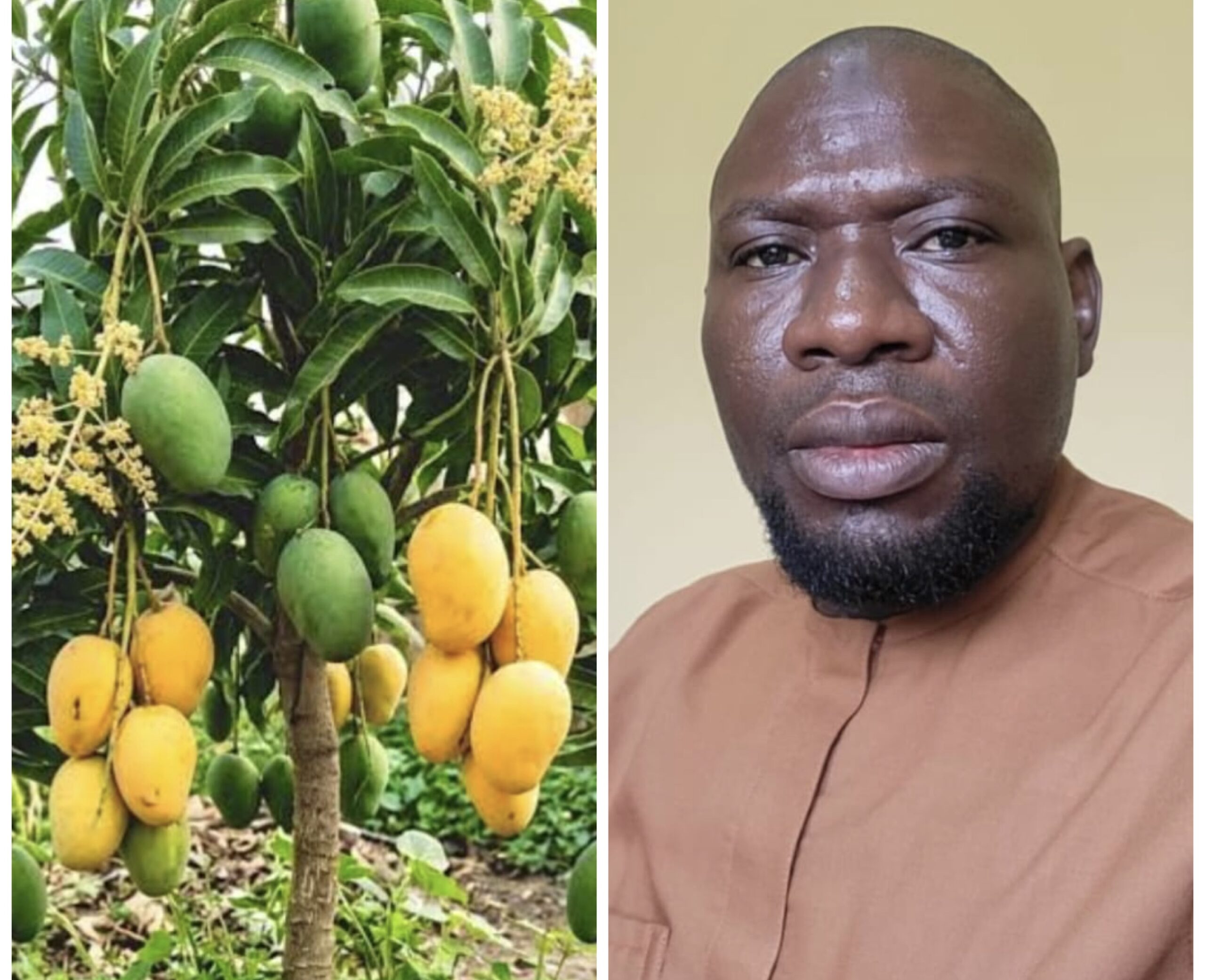
For those who grew up in Ogbomoso land or its serene environs, the arrival of April was never announced by the calendar. It was announced by the sweet, dizzying aroma of mangoes ripening under the relentless sun. The air carried a scent of promise, and the trees-majestic, sprawling, and heavy with fruit-were a symbol of nature’s generosity. Between April and July, every compound, every farmstead, and every child’s pocket was filled with the golden, juicy flesh of what many proudly call the best mango in Nigeria, and arguably the world.
But today, a quiet dread hangs over the orchards. The children still look up, but the branches are becoming bare. The once-legendary season now feels like a fleeting whisper. The question on every lip in Ogbomoso is no longer, “How sweet are the mangoes?” but a more urgent, haunting one: “Where are the mangoes?”
The Best Kept Secret That Wasn’t a Secret
What made the Ogbomoso mango exceptional was not its size, but its soul. Unlike the fibrous, stringy varieties found elsewhere, the Ogbomoso mango offered a buttery, melt-in-the-mouth texture with a perfect balance of sweetness and tang. Its edibility was legendary—you could eat a dozen without the slightest stomach upset. For decades, it was the unofficial ambassador of Oyo State’s cuisine, a seasonal gift that united farmers, traders, children, and even wayfarers who simply stopped under a shade to enjoy a free fruit.
That glorious season-April to July-was once a period of local economic boom. The markets in Ogbomoso would groan under the weight of baskets upon baskets of mangoes. A farmer needed only to shake a tree, and the ground would turn gold.
The Math of Loss: From a Basket to a Single Fruit
But time, as it often does, has been unkind. A personal investigation into the state of mango production in Ogbomoso and its environs reveals a disturbing trend: the fruit is gradually going into extinction.
The most painful evidence lies in the economics of the trade. Ask any elderly resident or a seasoned marketer at the local market, and they will recount a staggering shift. “In the past,” one nostalgic trader lamented, “200 naira could buy a full basket of mangoes-a basket so heavy you needed two hands to carry it.” Fast forward to today, and the same 200 naira cannot even secure a quarter of that basket. Instead, a single unit of mango-just one fruit-is sold for 200 naira. This is not inflation alone; this is scarcity dressed in the cloak of price tags.
Where did the mangoes go? The answer is a classic Nigerian paradox: the treasure was gutted by the very value it carried.
The Great Exodus: Unripe Departure to Lagos and Beyond
My research reveals the invisible hand behind the disappearing fruit. The mangoes are not rotting; they are being harvested away. A syndicate of marketers (middlemen) now moves into Ogbomoso earlier than the traditional ripening season. They strike deals with desperate or cash-strapped farmers to buy the mangoes at a cheap, unripe stage. The fruits are then bundled into trucks and spirited away to Lagos, Abuja, Port Harcourt, and even neighboring countries.
Why unripe? Because a green mango travels without bruising. It survives the long, bumpy journey to the city, where it is artificially ripened in warehouses using calcium carbide or other chemicals, then sold at premium prices. In a Lagos supermarket or roadside stall, a single Ogbomoso mango can sell for N500 or more. The middleman profits. The Lagos consumer is satisfied. But Ogbomoso? Ogbomoso bleeds.
The farmers, caught between immediate poverty and long-term prosperity, accept the quick cash. Consequently, the local market is starved of ripe, naturally sweet fruit. The children who once ate mangoes for breakfast now watch as the green, unripe harvest is loaded onto trucks heading south. The very agents of commerce have become agents of local extinction.
The Ecological and Economic Warning
This is not merely a nostalgic complaint. It is a serious economic and agricultural warning. Mango is an economic tree—a perennial asset that, if properly managed, can provide income for generations. The current practice of premature harvesting and export destroys three critical pillars:
1. Local Food Security: A nutrient-dense, free fruit that once supplemented the diet of thousands is now a luxury in its own homeland.
2. Farmer Income Stability: By selling unripe fruits at rock-bottom prices, farmers lose the higher value of ripe, local sales. They become laborers for distant traders rather than entrepreneurs of their own produce.
3. Genetic Erosion: As trees become less valuable to farmers (because they never see the ripe fruit’s full profit), old trees are cut down for firewood or timber, and no new trees are planted. The unique Ogbomoso mango variety faces genetic extinction.
How Do We Intensify Production and Harness This Treasure?
The disappearance of the Ogbomoso mango is not irreversible. But it requires a deliberate, multi-stakeholder intervention. Intensifying production is not just about planting more trees; it is about changing the economics of the fruit. Here is a practical roadmap for government, farmers, and investors:
1. Establish a Mango Value Chain Cooperative
Farmers must be organized into cooperatives that bypass predatory middlemen. A cooperative can pool resources to buy small trucks, process unripe mangoes into local products (dried mango chips, pickles, juices) or negotiate better prices directly with Lagos buyers while retaining a quota for the local market.
2. State-Government Backed Mango Processing Plant
Oyo State government should establish a small-scale fruit processing plant in Ogbomoso. This plant would buy ripe and unripe mangoes at fair prices to produce concentrates, jams, fruit leathers, and canned slices. This creates jobs and ensures that value addition happens in Ogbomoso, not in Lagos.
3. The “Two for One” Planting Policy
For every mango tree cut down or dying of old age, a farmer should plant two new seedlings. The local government can provide subsidized seedlings of the specific Ogbomoso strain. A mango tree takes only 2-3 years to fruit. If we start today, by 2030, Ogbomoso could be swimming in mangoes again.
4. Create a Mango Festival and Geographical Indication (GI) Tag
Ogbomoso should host an annual “Ogbomoso Mango Festival” every May. This would attract tourists, researchers, and buyers. More importantly, Nigeria should apply for a Geographical Indication tag (like Champagne in France) that legally protects the name “Ogbomoso Mango.” This stops other regions from passing off inferior mangoes as the original and raises the fruit’s global value.
5. Sensitization and School Orchard Programmes
Every primary and secondary school in Ogbomoso should be mandated to have a mango orchard of at least 10 trees. This reconnects children to their heritage, provides future fruits, and teaches agricultural science practically. Farmers need workshops on grafting, pest control, and post-harvest handling.
6. Credit and Storage Facilities
Banks and microfinance institutions should offer “Mango Loans” for farmers to hold their harvest without pressure. If a farmer can store ripe mangoes in a small cold room for two weeks, they can avoid selling to exploitative middlemen. The government can provide solar-powered cold storage units in strategic locations.
A Call to Action for Ogbomoso Sons and Daughters
This is not just a farm problem. It is a home problem. Every son and daughter of Ogbomoso, whether at home or in the diaspora, must become a stakeholder. If you live in Lagos and buy Ogbomoso mangoes, ask your seller: “Do you know the farmer? Are these truly from Ogbomoso?” Demand transparency. Better still, sponsor the planting of 10 mango trees in your ancestral home.
The Ogbomoso mango is not just a fruit. It is a living memory of a land that was once generous and self-sufficient. It is a legacy of taste that should not become a tale told only to grandchildren. The question “Where are the mangoes?” should not become a eulogy. It should be the beginning of a renaissance.
We still have the land. We still have the seeds. We still have the memory of that unmatched taste. What we need now is the will to protect, plant, and profit—right here in Ogbomoso.
The mango tree is waiting. Will we shake it or let it fall?
Dr. R. B. Ibrahim (08104294271) is an Urban Infrastructure Development Planner, writes on intensifying production of Mangoes for sustainability in Ogbomoso and its environs. He is a sabbatical appointee from the Department of Urban and Regional Planning, Faculty of Environmental Sciences, Ladoke Akintola University of Technology (Lautech), Ogbomoso, Nigeria.