


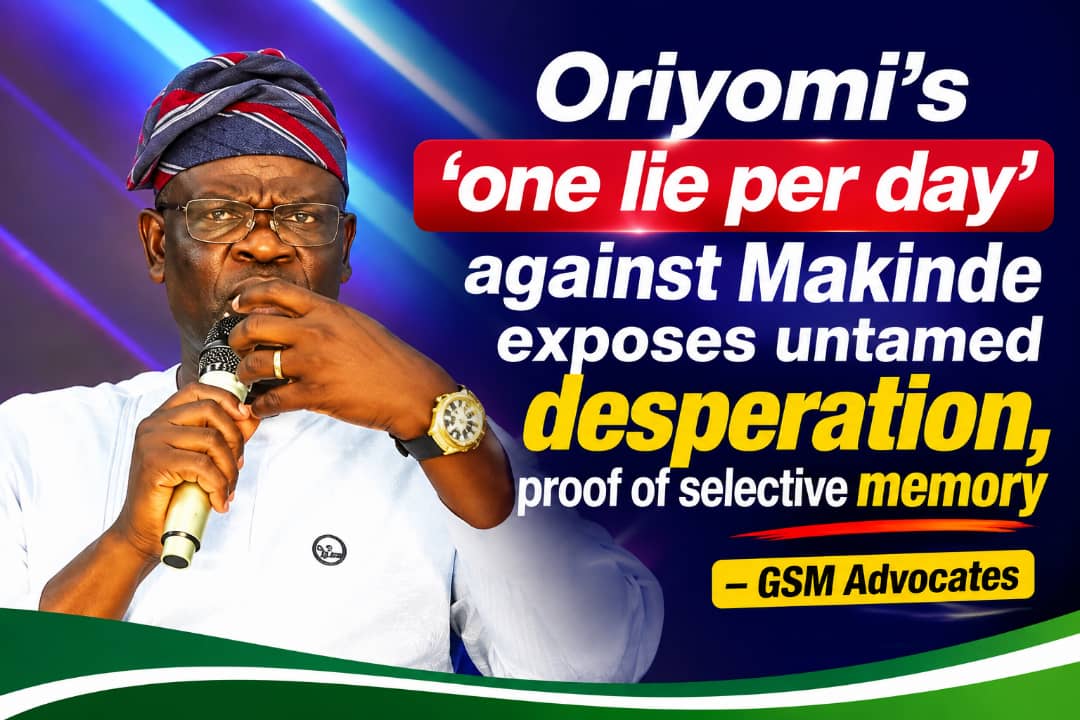
‘One Lie Per Day’ Against Makinde Exposes Desperation, Selective Memory — GSM Advocates Slam Oriyomi Hamzat
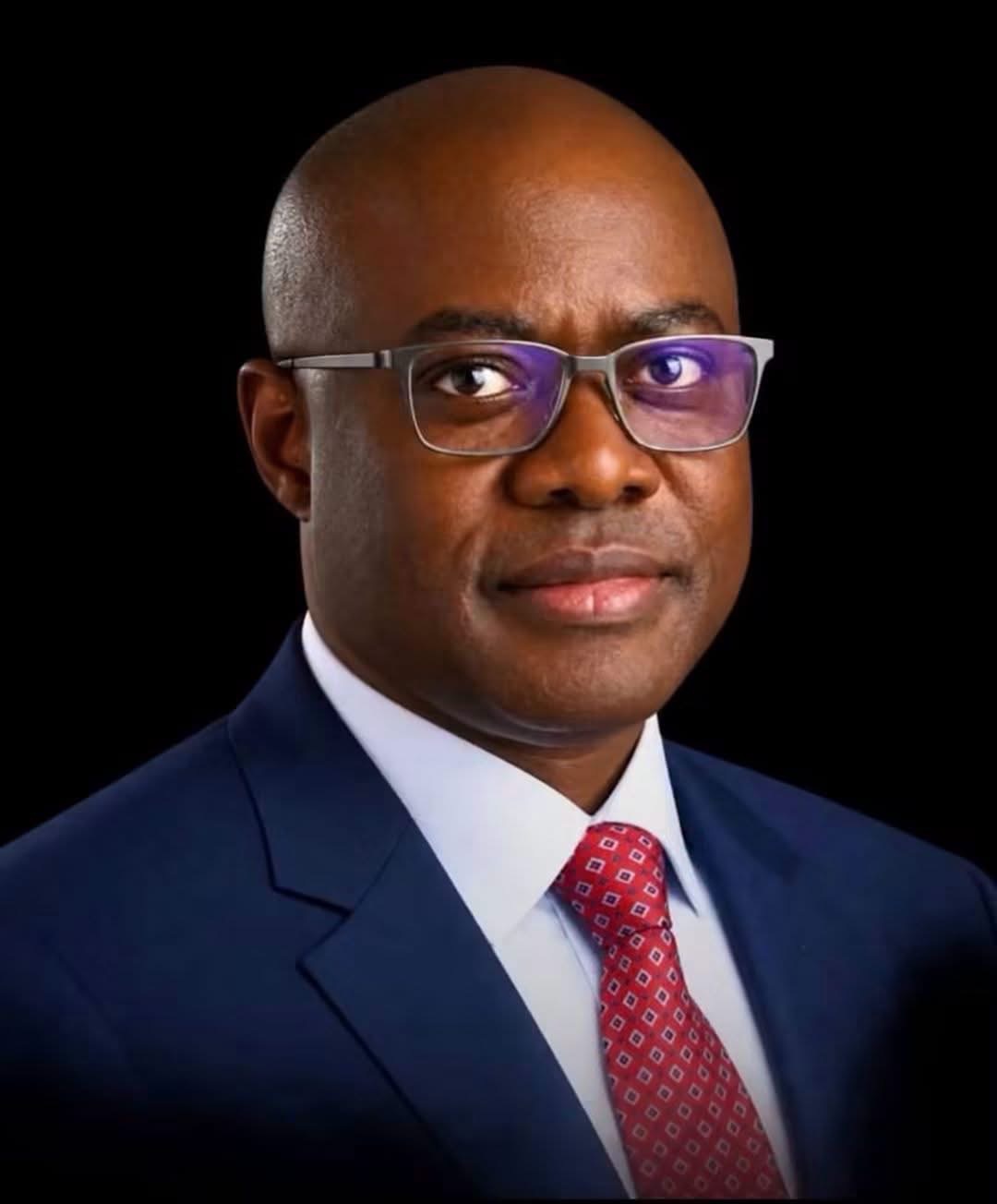
A leading sociopolitical group in Oyo State, GSM Advocates, has described recent claims by factional Accord Party governorship candidate, Oriyomi Hamzat, against Governor Seyi Makinde as evidence of “a politics of self-credit and selective memory.”
The group, in a statement issued on Monday by Akanbi Abiola, said the persistent attacks against Governor Makinde following the fallout between both men were aimed at rewriting history for electoral advantage.
GSM Advocates noted that while Hamzat has the constitutional right to contest the 2027 governorship election and criticise the Makinde administration, political competition should not be turned into an avenue to distort facts.
The group’s reaction followed claims attributed to Hamzat that he was among those who “brought” Makinde into the Oyo State governorship race and should therefore personally receive credit for some achievements of the administration.
According to GSM Advocates, such a claim amounts to an oversimplification of a political process that involved political parties, leaders, campaign organisations, financiers, mobilisers, and thousands of Oyo voters.
“There is a point at which political criticism ceases to be a legitimate contribution to public discourse and begins to look like an attempt to rewrite history for electoral advantage,” the group said.
“Politics is competition, and democracy thrives when credible alternatives are available. But political competition does not confer ownership of history,” it added.
The group questioned what Hamzat meant by saying he “brought” Makinde into the race, arguing that the governor had established himself as a political figure in Oyo State long before the 2019 election.
It recalled that Makinde contested for the Senate in 2007 and ran for governor in 2011 and 2015 before emerging as the Peoples Democratic Party, PDP, governorship candidate in 2019.
“Long before 2019, when Oriyomi was a common freelance radio broadcaster like every other freelancer, Makinde had participated in party politics, built political relationships, developed political structures and contested elections.
“To present his emergence as governor as though it was fundamentally the product of the intervention of one individual is historically flawed and difficult to sustain even in the eye of common sense,” the statement read.
GSM Advocates acknowledged that if Hamzat’s claim was that he supported Makinde in 2019, campaigned for him, or used his media platform to promote his candidacy, such contribution could be recognised.
“But campaigning for a candidate is not the same thing as creating the candidate,” the group stated.
The group therefore challenged Hamzat to publicly document the specific role he played in Makinde’s emergence as PDP consensus candidate and eventual victory in 2019.
“If he believes his contribution was decisive, he should tell the public precisely what he did, the structure through which he operated and the role of other political stakeholders in that process.
“Political history should be established by evidence, not retrospective ownership like Oriyomi is trying to do,” it added.
*’The People Of Oyo State Made Makinde Governor’*
GSM Advocates maintained that no individual could claim to have single-handedly made Makinde governor.
“The people of Oyo State did,” the group said.
It explained that the 2019 victory was the outcome of a statewide political process involving party leaders, campaign workers, political organisations, and ordinary citizens.
“Thousands of voters went to polling units across the 33 local government areas. Party members mobilised. Campaign workers worked. Political leaders engaged voters. Political actors negotiated alliances.
“Thousands of ordinary citizens made individual decisions at the ballot box, and the ultimate political mandate came from the electorate,” the statement noted.
The group argued that any attempt to personally appropriate that mandate diminishes the role played by Oyo voters and called on Hamzat to provide verifiable evidence for claims concerning the growth and expansion of his media platform if being used as proof of political influence.
“If supporting Makinde in 2019 gives one person ownership of the achievements of his administration, what happens to the thousands of campaign volunteers, party members, traditional leaders, religious leaders, youth leaders, women leaders, political mobilisers and ordinary voters who also supported him?
“Would they all now be entitled to a percentage of the administration’s achievements?
“People support candidates because they believe those candidates can provide good governance. Once elected, constitutional responsibility for governing rests with the elected government.
“The electorate can subsequently praise the government, criticise it, replace it or re-elect it. That is democracy.”